Complete breakdown & overview of a weapon system optimized for civilian night born operations & the thought process behind each component selection.
NIGHT FIGHTERS BROAD SWORD
REBEL_SPIRT_OPERATIONS
Suppressor
Muzzle Device
Barrel
Gas Tube
Gas Block
Handguard
Flashlight
Laser Aiming Module
Angled Foregrip
Upper Receiver
Charging Handle
Bolt Carrier Group
Dust Cover
Optic
Optic Mount
Magnifier
Magnifier Mount
Lower Receiver
Safety Selector
Trigger
Grip
Lower Parts Kit
AR15 Lower Parts Kit | AERO PRECISION
Buffer Tube
Buffer Weight
Buffer Spring
Stock / Brace
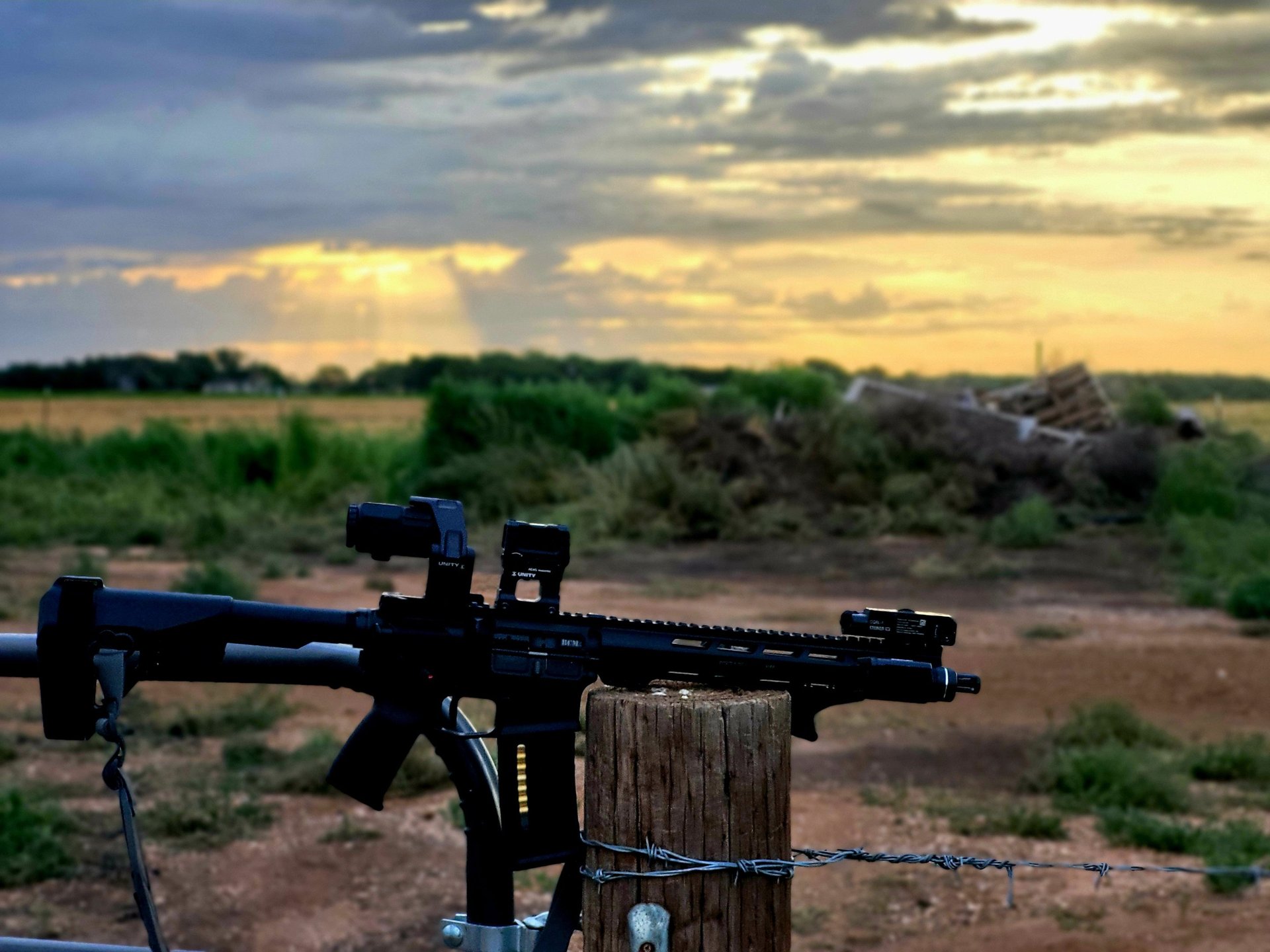
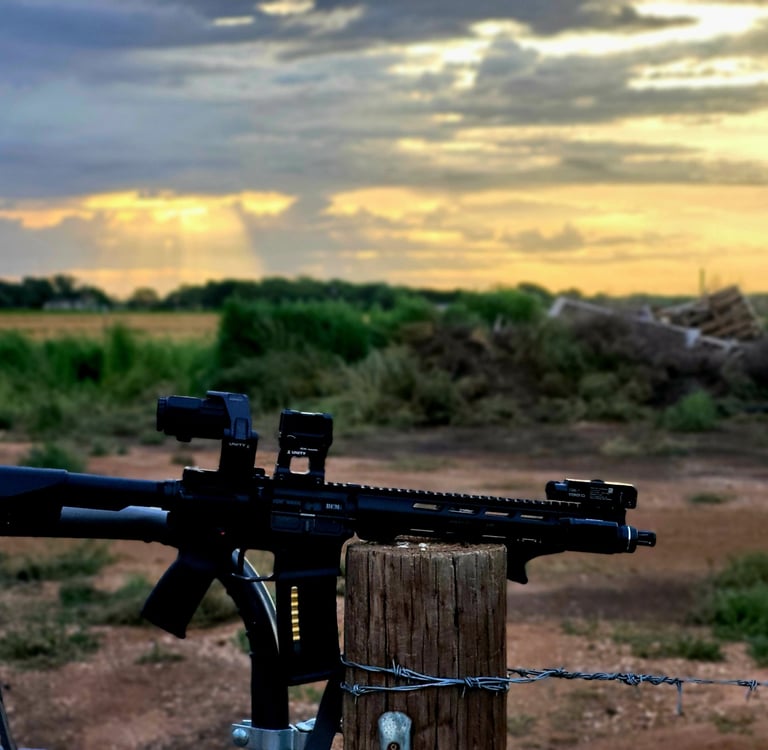
Around January of 2023, I decided to build out my 2nd rifle. The only rifle I had at the time was a 16" BCM & used a riflescope with a 2-12 magnification level. And while the platform itself was very capable & a bit of a sweet spot in its own right, it also lacked in some areas. Particularly when paired with a night vision unit & when working in confined areas such as vehicles. I had just recently committed to a Gen 3 white phosphate PVS-14 so the desire to have a weapons system that would complement my newly found capabilities was strong.
My prior rifle being a complete upper & lower I had just slapped together, this would be the first rifle I would piece together from individual components. In efforts to minimize the number of mistakes I was sure to make, I decided to map out the entire build on an excel spreadsheet prior to ordering any highly specific parts. This would also act as a reference point since I would need to save & purchase each component over time.
Being new to this process I didn't really know where to start so I just began with what I did know to be true and that was what I wanted from the build when it was complete. Having defined goals would keep me from turning this into one giant mess of a "Do It All Rifle" & ideally let me optimize for its intended purpose. I've mentioned the original purpose of this build was primary to be paired night vision equipment & while that is true, personally I don't spend enough time under NODs, nor do I make enough money to build out a platform that would solely be for that purpose & that purpose alone. No matter which way I cut it, this rifle would have to server more than one role. But if I'm wise about it, those roles may end up benefiting from each other instead of being an hinderance.
Mapping Out The Build
Even though I can't do a build strictly for the purpose of nighttime fighting, it's still a main theme of this build & we can start to take note of what aspects make-up a good night fighting rifle & then cross examine them with other roles, seeing if anything matches up.
Starting things off will be caliber. 300BLK is a very popular choice for night fighting & while it would be a neat round to get into, I find it to be a bit too specialized for this type of build. The ammo itself is also a good bit more expensive than say 5.56, harder to find & less effective at distance. Logistically 5.56 NATO makes the most sense so we will stick with that.
Far as the weapon system is concerned there are really only a few aspects that aid when employed under night. A passive aiming system such as a red dot or holographic site, an active aiming system typically in the form of an IR laser device, & an illuminator in the IR spectrum. And while there absolutely are other aspects that help aid when it comes to NVG use, these aspects are the big three & at minimum 1 of the 3 will have to be incorporated into this build in order to achieve my goal.
Vehicles are extremely prevalent in both military & civilian day to day life & will continue to be this way regardless of how good or bad the times are. While a 16" scoped carbine is absolutely useable in & out of vehicles, the optic & barrel length are aspects that you will have to work around, instead them enhancing your performance generally speaking. A shorter platform & a smaller optic that's more easily used in unorthodox shooting positions will ultimately be the better choice. These factors obviously also make it a good weapon system for other confined spaces such as structures, ladders, and what not over our prior mentioned existing rifle.
Lastly there's what I'm calling the 'Other Environmental General-Purpose Consideration". I live in an area that borders 2 fairly different environments. To the North-Northwest lies vast open plains with flat lands & to the South-Southeast are large hills with trees & thick shrubs every square foot. The AR I already had & ran did very well in the more open area, but I did notice that not only was the larger optic getting snagged on all the vegetation, I also wasn't able to use it to its full potential. When you can't see past 150-200 yards in any direction, having that much glass just ends up being a waste & even a pain. Having a smaller optic with more field of view vs magnification would be the wiser choice for this area of operations.
Origin Story
Heart of the Rifle
Looking at all 3 of these factors we can see some common aspects start to pop up. An AR with a barrel length shorter than 16" using an optic with zero or very little magnification such as a red dot or holographic sight &, if possible, the adoption of a L.A.M. or Laser Aiming Module into the system for increased capabilities at night is preferred. And while not priorly mentioned, a white light & sling for this system is a non-negotiable requirement. Not a ton of information to go off of, but enough to get started.
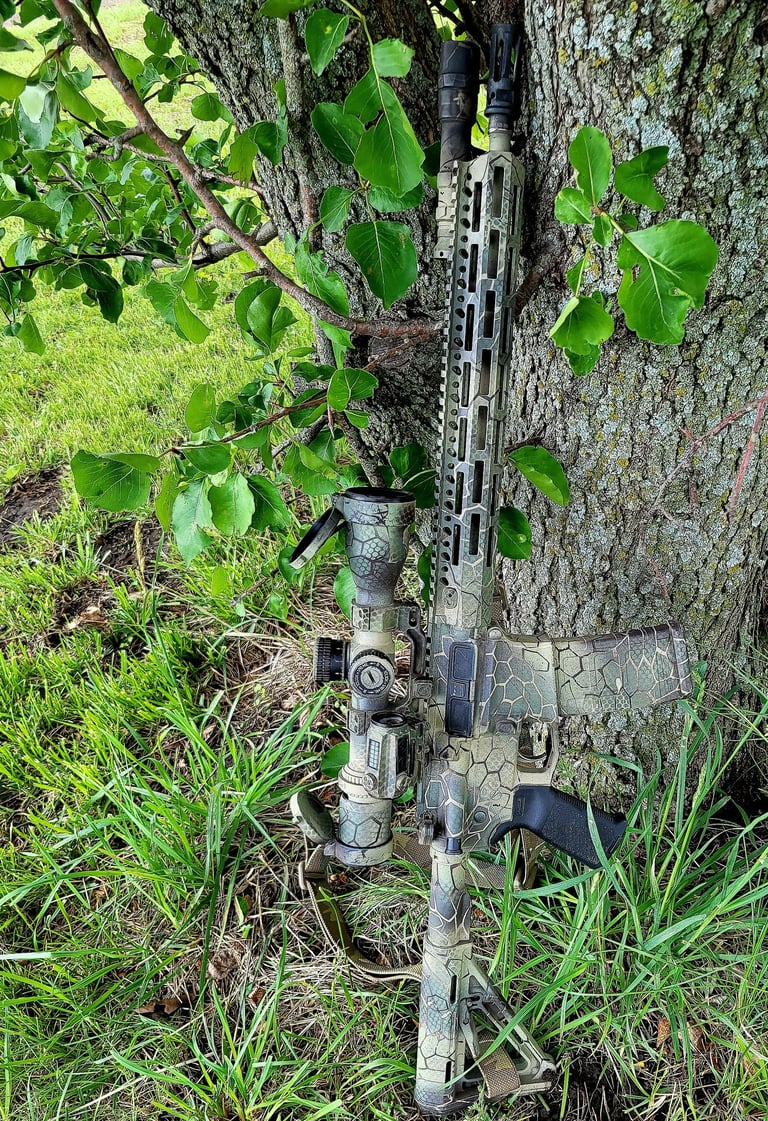
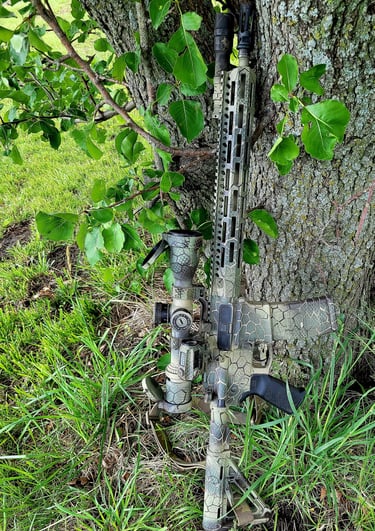
Now if you're a follower of Brass Facts at all you may have heard him refer to the optic as the heart of the rifle. His reasoning is that the optic will ultimately determine how the platform will be used. While I understand his reasoning & even largely agree, I find a more accurate representation of the optic would be the brain. Since it determines how the body will operate similar to how he views the optic determines how the rifle will be used. Unless he's more of a lead by the heart kind of guy lol but I digress, the BCG would likely be the heart since it pumps ammo into the platform, keeping it up & running like blood in the body. However, at running the risk of being wrong even by my own logic, I prefer to refer to the barrel as the heart of the rifle since it ultimately determines what the rifle is capable of doing. I have a broad idea of what my optical situation will look like thanks to our prior planning, so before I attempt to nail down that aspect, lets hammer out some more details starting with the barrel.
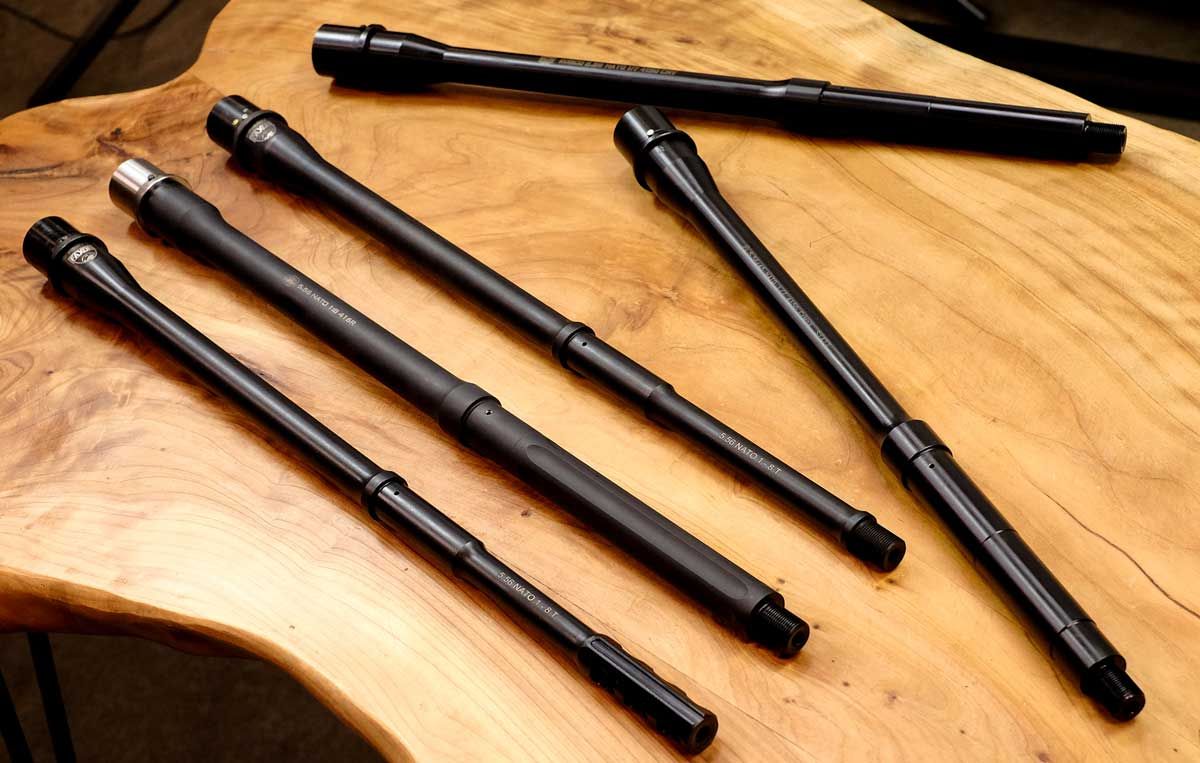
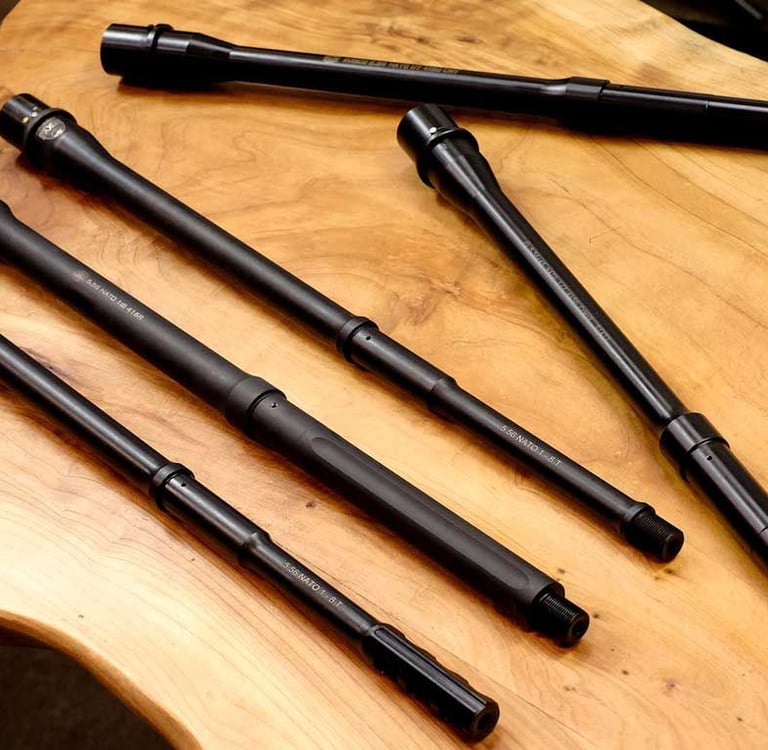
We know that it can't go past 16" in length &, if possible, we may want to try & keep it on the shorter side since they do better in both thick shrubs & vehicle use. Barrel length doesn't necessary matter for NVG use specifically. However, a longer barrel would likely aid in reduction to any muzzle flash which is an overall plus especially when using night vision. Since there are other ways of dealing with muzzle flash & typical engagement distances are reduced at night even under nods, a short, barreled AR seems to be a flat win across the board. Almost... There is one large draw back to shorter platforms in the 5.56 caliber and that's velocity, the largest factor in what makes 5.56 so effective. Go too short with a barrel & not only is it harder on the internals of your platform, but it may not have enough speed to reliably fragment when it hits its target at medium-extended distances.
Theres also the added downfall that shorter AR-15s just have a lower overall lifespan than that of say a 16" or 18". Both the NVG & thick wooded area use case don't have a large need for taking shots at extended ranges due to their own unique reasonings & even though a shorter barrel does better for moving in & out of vehicles, that doesn't automatically mean our targets will be at a closer range. I could be traveling in a vehicle on the flatter part previously spoken of & if we had to bail out of the car due to an ambush or something else, a super short barrel isn't helping me out that much.
So, what's the correct length? 5.56 needs around 10 inches in barrel length in order to achieve the velocity that makes it so effective, so I guess the answer is somewhere between that and 16". I've had some time behind an 11.5" thanks to a buddy of mine. And while I found the platform very useable, the 10.5" handguard it had on it, was a bit too short for my personal liking. This led me to start looking at the 12.5"-barrel length. since once you take the muzzle device into consideration, it would be able to be paired with up to a 12" handguard. The additional 1.5ish inches it would give me, should pair much better with my longer monkey arms & the added velocity small as it may be, is never a bad thing. The 12.5" length also pairs really nice with a suppressor in my opinion, both in usability & visual appeal, which regardless of what anyone says is subconsciously important to most of us. I'm not 100% sure if a whisper pickle will even be apart of this build, but this being a platform with NVG use in mind, I want to leave room for that possibility. After a bit more research I settled on the 12.5"-barrel length & even had a good idea at which specific barrel I wanted to initially try.
The 12.5-barrel commercial market isn't as largely supported as the 11.5 is & has the reputation of being a bit harder to properly gas in order to run reliably both suppressed & unsuppressed. I still was not sure if a can was in this builds' future, but if it was then it has to run reliably in both conditions. Whisper Pickles are amazing for reducing signature, protecting the users hearing & again look quite nice, but retain a ton of heat when firing & during events with fast high round counts that heat could prove problematic both mechanically & useability. We will dive more into this when we get to that part of the planning stage, but we will need to keep this in mind when making our barrel selection due to its gas length and port size will be a large factor in this situation.
I mentioned I found a barrel I was interested in trying and it was largely due to its gas system length & port, claiming to run reliably with and without a can. There wasn't a ton of video footage or reviews on this particular barrel & even then you have to take them with a grain of salt, due to people can have an insinuative to praise/hate on a product and footage can be selective. However, the barrel design itself was influenced & co designed by a respectable shooting instructor who stood by the product enough to have his name stamped on the side of it. I mean technically it's his company logo but same thing really. And having a firearm or barrel stamped with your name on it as an instructor can be massive, mostly in bad ways if it turns out to be garbage.
The Eye
I know earlier I referred to the optic as the brain of the rifle & I do still believe that to be true, however that doesn't have a great ring to it so we will go with the eye of the rifle. Here I spent a TON of time researching my options. I wanted something that would pair nicely with my PVS-14 for passive aiming, be better suited for a thick wooded environment, do well in confined spaces with possible unorthodox shooting positions & above all else be durable enough to withstand less than ideal conditions. Earlier we narrowed it down to a holographic or red dot sight making my job slightly easier but with the market flooded with red dot options, so the task was still a bit daunting. Prisms are useable under nods to varying degrees & I do like them quite a bit, but I don't think any of them preform as well as our other options, not even close.
Giving credit where its due, I need to give some praise to YouTuber Brass Facts, Hoplopfheil & the Nova Group specifically. A large portion of my "research & homework" when it came to my optic and other NVG specific accessories, came from their ample amount of NVG footage using different optics, laser aiming modules & other night vision specific equipment. They are one of the unique few who not only have a ton of time using NVG equipment in a more civilian prepared manner, but record a large amount of that time and post it freely for us to enjoy.
Regardless the Eotech models have one major drawback for the civilian sector specifically in my opinion & that's battery life or the lack thereof. Depending on which model you get, they are powered by a couple of AA or a CR123, neither of which have a decent battery life again, in my opinion. I don't want to dive into exact hours and everything here, but either way one would need to swap out the batteries multiple times a year. Which adds up over time & can potentially prove hazards if one isn't religious about swapping them out. It was also lacking in some features that may not be a big deal for a military or professional unit of some kind, but I found appealing as a civilian. Mainly the shake awake feature since I have had prior experience with Holosun optics & had been completely spoiled on that feature alone but the added solar window is quite nice as well. I can't recall exactly but I believe none of the Eotech models had any form of shake awake technology or if they did, it severely demisted an already poor battery life. On top of everything else, that optic was on the heaver side of things which was not particularly appealing either. None of these factors make it an absolute no for my use case, but for now I'm labeling it as a solid plan B option.
Naturally I started with the king of passive aiming, the Eotech holographic series. They offer a large selection of models in this line up that do slightly different things but most of them are generally the same & we can lump them in together for now & then dive into each version if we decide to go that route. These optics offer the user a few different reticle options that all seem to float in midair while looking through them under nods. With amazing light transmission, a large window & a rugged housing unit. The price tag on them is also nothing to scoff at, but I'm not limiting this build to a fixed price point. Even if I tried to go a more "budget route" on this build, I would still have to slowly buy each component over multiple paychecks. Plus, I spent good hard-earned money on my NVG setup for the added capabilities it provides. I don't want to needlessly spend money biased on name brand or which special operations unit is running them but hindering it with a poor rifle build that limits said capabilities just doesn't make a ton of sense in my mind, so a little extra time for the build is fine by me.
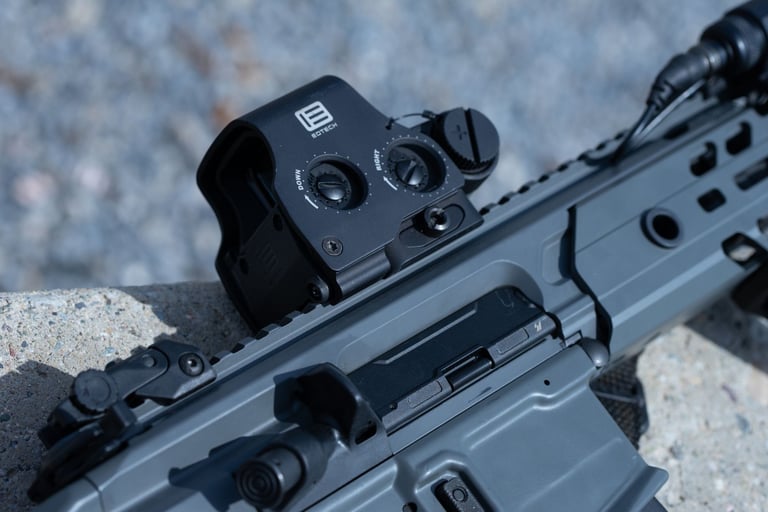
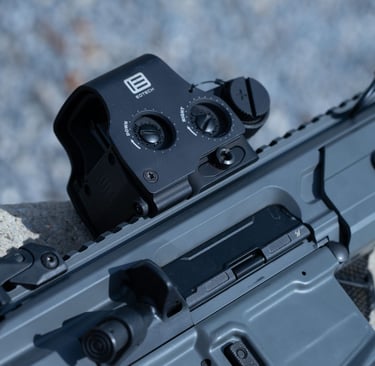
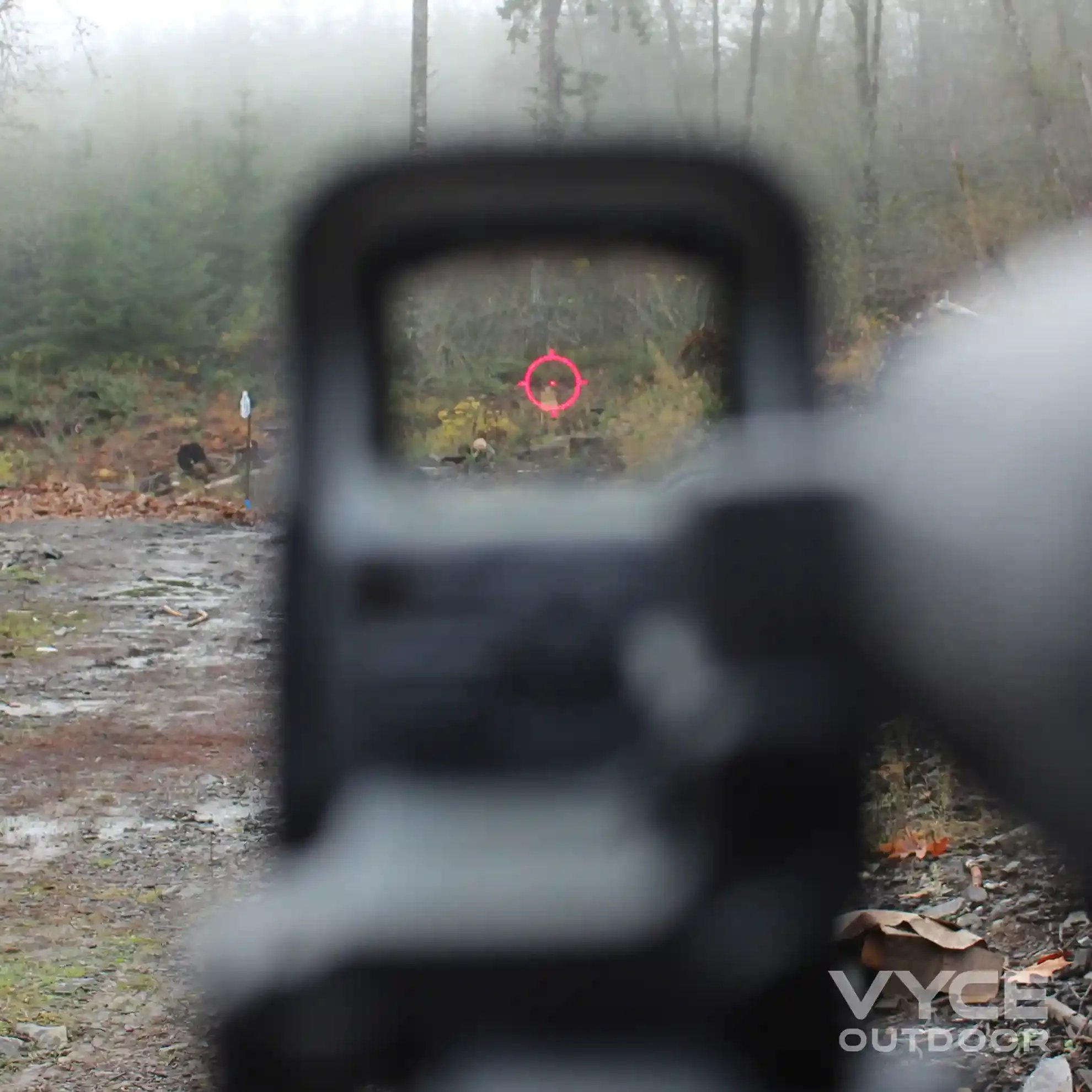
After looking there, I turned my attention to the red dot market & it's endless offerings. The Aimpoint T2 or Comp M5 models were my first stop due to their remarkable durability & glass clarity. And unlike the Eotech, their battery life was perfectly acceptable as a civilian getting the rough standard of 50,000 hours of life off a single AAA disposable battery which are cheap & plentiful. Mounting options for them are just as numerus as the selection of red dots & they may very well be the number 1 most durable optic on the planet with a long and proven track record. Red dots preform amazingly in close to mid length engagement distances due to their infinite eye relief & can be extended out even further with the use of a magnifier. There were 2 minor complaints I did have with this option though. One was the lack of a shake awake feature which now that the battery life is fixed that feature seems less important as I can just leave the optic on 100% of the time and still only need to change it out once a year & the solar fail safe was always just an added plus, nothing i was going to specifically look for.
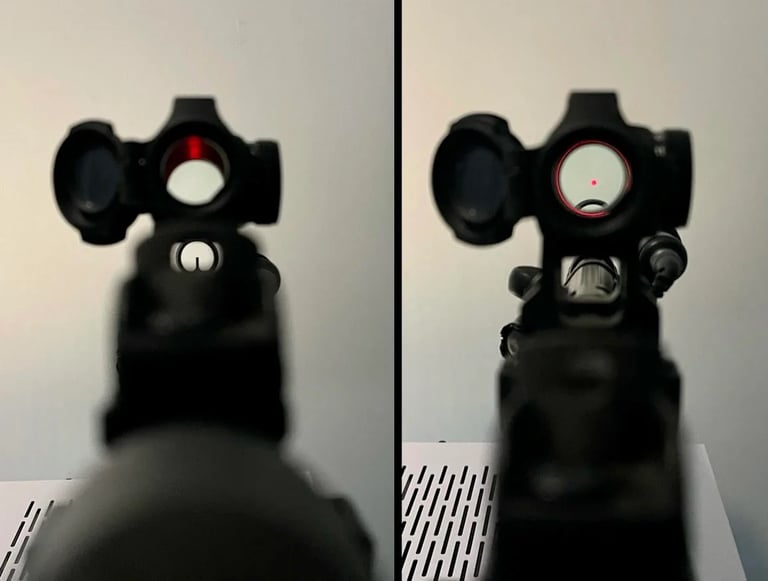
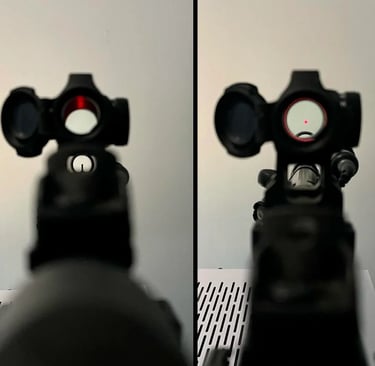
Another factor that didn't make this an immediate buy was the small objective window & decently thick housing outline. The window isn't abnormally small compared to other red dots but one of the reasonings people claim the Eotech is the king of NVG optics is the large optical window. So, the fact that this one was relatively small & the housing unit itself was a bit bulky blocking even more of ones over all sight picture was an initial hang up. However, this unit is still praised amongst NVG users so the window size can't be too bad.
And even though we were not going to put a price limit on this build, I'm still not for paying large sums of money simply because of the name printed on the side. Like I said prior this is likely one of the most durable optics on the planet & the glass on it is quite nice, but is it worth north of $1,000 in 2025? Man, that's a hard sell. Red dots are very simple devices that have a streamlined manufacturing process & very low material cost. Even when using high grade housing materials & glass when these companies buy them at scale the price is shockingly low. And you can't tell me Aimpoint hasn't made their R&D money back since the T2s' release in 2007 & hundreds of thousands potentially millions of units sold.
Again, I really don't mind when paying for quality, but on paper this just didn't make a ton of sense. So similar to the Eotech, the AimPoint series lineup will be put in my plan B lineup, while I continue my search for an optic that can perform well under nods & during the day while not actively trying to raid my wallet. Now I'm not going to cover every single option I went over, mainly due to the optic selection process for me literally was a multi month long process going back & forth on features, footprints, prices, weights, durability, light transmission etc... The autism was very strong lol. Instead I'll cover the main contender against these two optics & my finial decision.
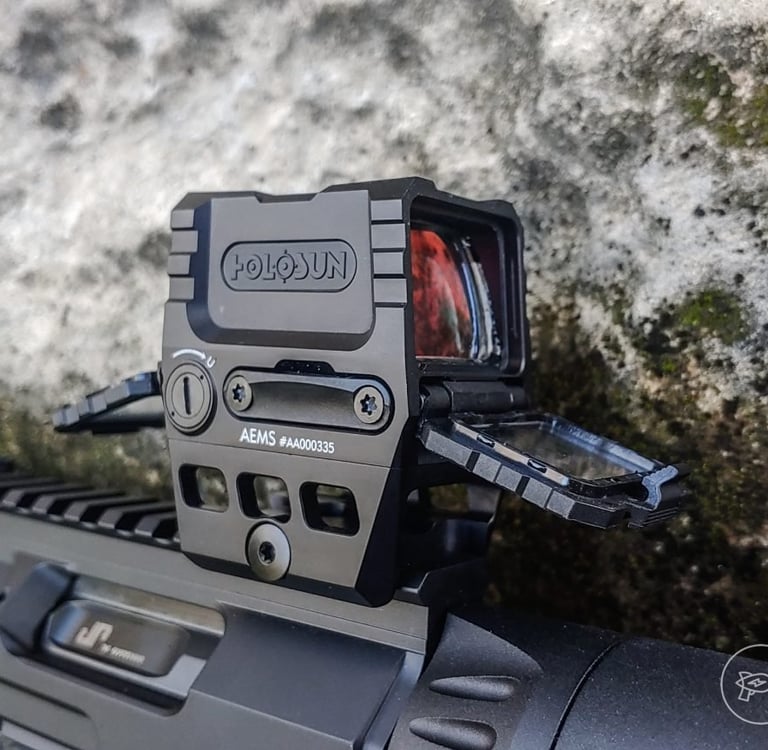
Going head-to-head against these two powerhouses of optics was the Holosun Advanced Enclosed Micro Sight or AEMS (V1) for short. A chines made red dot produced by a company that has proven their worth to the community at large at least in my eyes & the eyes of many others including professionals. It's sporting an optical window that's almost double in size of more traditional red dots like the Aimpoint T2, but not quite as large as Eotechs offerings. Standard 50,000 hours of battery life with or without a solar failsafe window, but the model I was particularly looking at was one with it. It has a small 2moa dot with .5 MOA adjustment clicks which isn't .25 like I'd prefer but that's a minor complaint in the long run. Body is made from 7075 T6 Aluminum, has amazing light transmission while using night vision equipment & has clear protective lenses built into the body itself. The profile has a slick and streamlined design reducing the risk of any potential snag & even though the optical window is again about double that of others, the overall size & footprint of the unit itself isn't noticeably bigger. In fact, it may even be smaller in some cases.
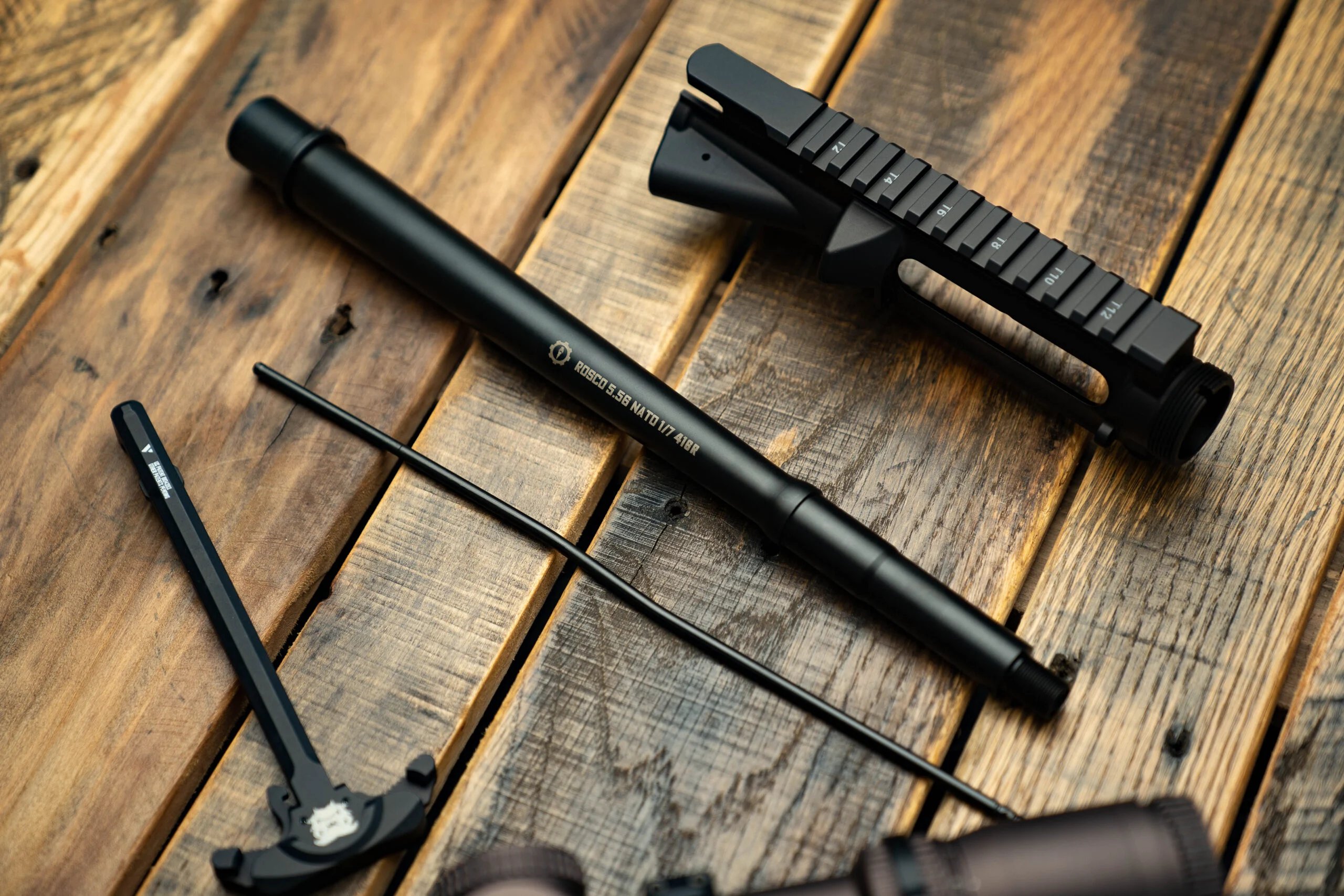
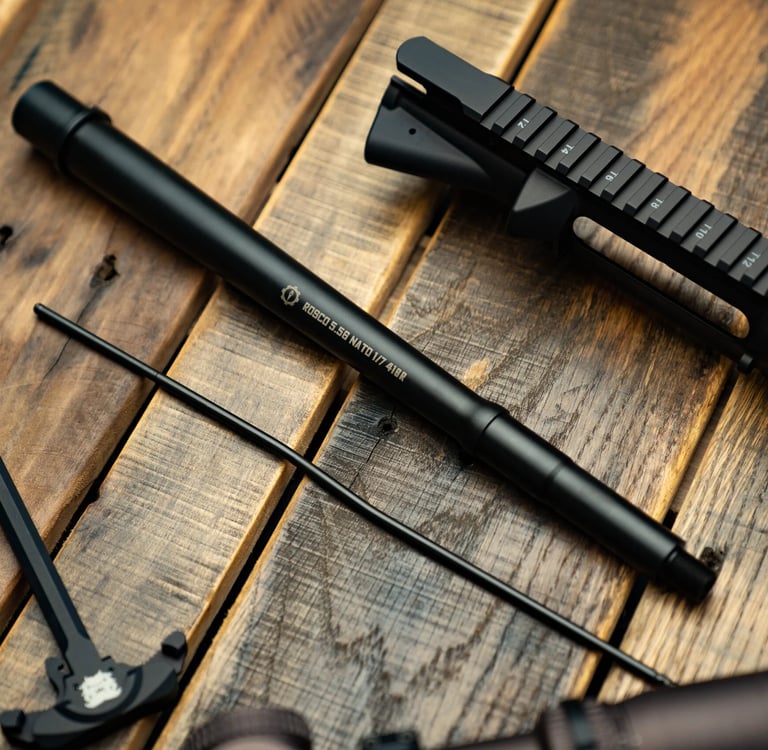
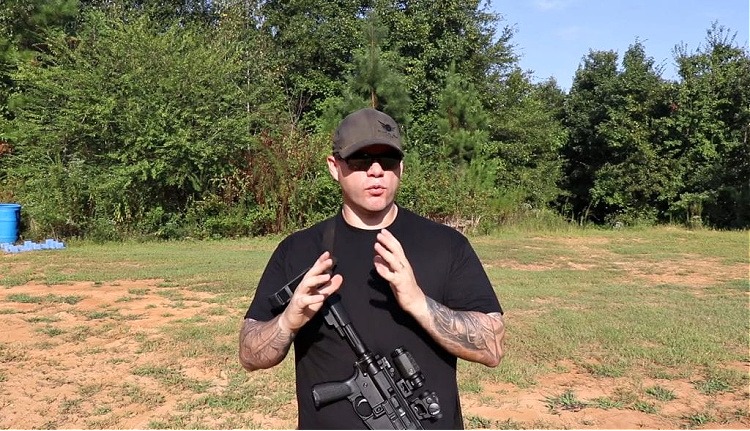
The K-9 Sage Dynamics 12.5" barrel by ROSCO Manufacuring, offers a proprietary patrol length gas system that is smoother than carbine length, more reliable than mid-length & sits in-between the two, length wise. Aaron Cowan is the founder & operator of Sage Dynamics, a well-respected firearms training institution for professionals & civilians. Himself & Rosco Manufacuring, worked together to design & bring to market a barrel & new gas system length specifically for the 12.5"-barrel length. This new "Patrol Length" & proper gas porting size claims to solve the can no can debacle.
Rosco has had some quality control problems in the past years back but has made remarkable strafes to not only correct those problems but improve their products and process overall. That combined with Aaron Cowan having direct input on it as well as his reputation on the line so to speak, I found it to be the most modern design most likely to fix the suppressor debacle.
The barrel itself features a continuous taper with the weight shifted to the back of the barrel. The design itself should dissipate heat quite well having all that material in the back where you want it while not putting any unnecessary weight up front. They are made from 416R Stainless Steel, which is not my preferred Cold Hammer Forging process, but do provide the benefit of being more accurate even if less durable. It's not going to shatter or melt on you from some light to moderate FRT use or anything like that, but total barrel life will be less than that of a CHF one. It has a 1/7 twist rate which is fine & a recessed target crown on it, further adding to its accuracy which is a nice cherry on top. The entire 12.5" length is an estimated gamble on if I'm going to like that short of a barrel anyhow, so a design with a new gas system that in theory should fix the problems previously spoken on seemed to fit.
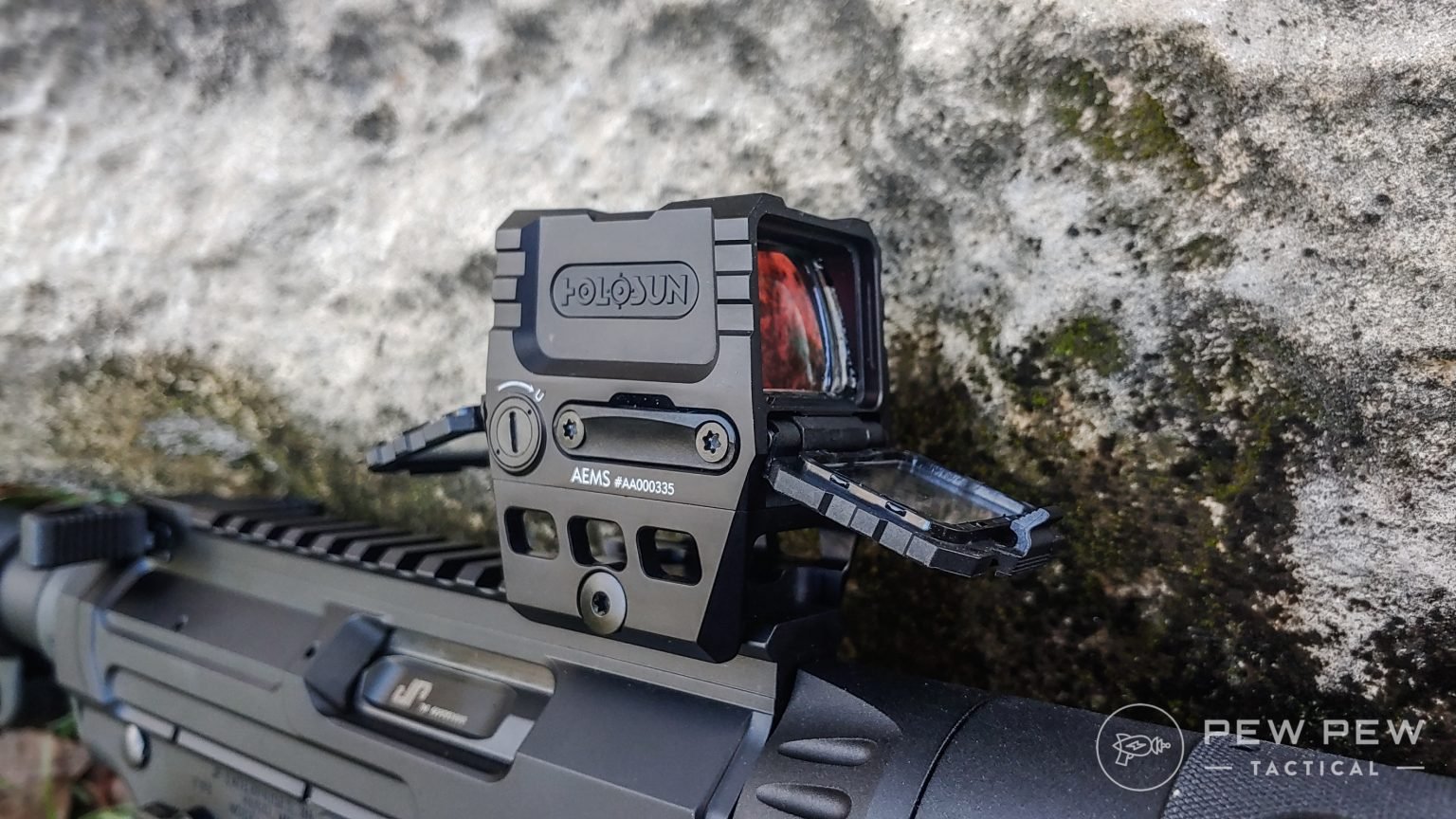
The price tag on it too wasn't horrible either not cheap by any means but cheaper than both the Eotech & Aimpoint offerings by a noticeable amount. At the time they were still a relatively new offering coming in around the $350-$450 marker depending on sales & model. A solid mid-tier option price wise but feature rich.
It's not all sunshine & daisies though, there was one issue with it that could be a complete deal breaker. The optic has the slightest amount of a parallax issue according to Brass & Hop as well as a few others who had put out a review on this optic. The amount is very small but noticeable, not enough to make it unusable or even a major problem but something to take note of.
Which I had completely forgotten to do when I was making my optic selection. Not sure how I managed to forget such a key detail about this red dot considering the fact I had made a spreadsheet comparing all my options, but I did.
After apparent not so careful consideration I selected the AEMS as the sighting system for this build & other than the minimal parallax issue there's one other aspect we need to address. The unit also comes with a lower 1/3 mount right out of the box that I imagine will have some longevity issues. It uses a cross-bolt design which is my favorite method of mounting optics, however they only used a singular locking point which universally has shown to not hold up over extended use. Unfortunately, poor mounts tend to be a common factor in low to mid-tier offerings & even poke their nasty head into some higher end ones as well. If I want this to truly be a robust & reliable platform, the stock mount will have to be replaced with one from a 3rd party but which one?
I'll put a pin in that for the time being because I'm not done with my optical selection. See while a red dot & iron sights for that matter are capable of making hits on target from 5-400 yards with a minor amount of training, they lack in the ability to gather detailed information out at distance a.k.a. target identification. Which is very important. Anyone firing their weapon system needs to know what they are shooting at before the trigger is pulled largely. Time of war I know situations pop up where you may not know exactly what you're firing at, but you know friendlies are not in that area, the enemy is or likely is in said area & there is movement. Yea spray and pray, but as a prepared civilian having magnification for information gathering is key.
Enters offset ACOG... ok joking. Magnification is key for civilians & it's something I preach a fair amount so it will be a part of this build as well. Magnifiers are basically just a prism optic with no reticle feature that can be paired with other optics such as red dots, holographic sites & even other zero to low magnification prisms. Prisms naturally are extremely durable & the fact that you don't have to worry about it holding zero just makes it even more so. For me this was actually a very quick & simple process, there was only one right answer far as which magnifier to choose when it comes to glass clarity & ruggedness.
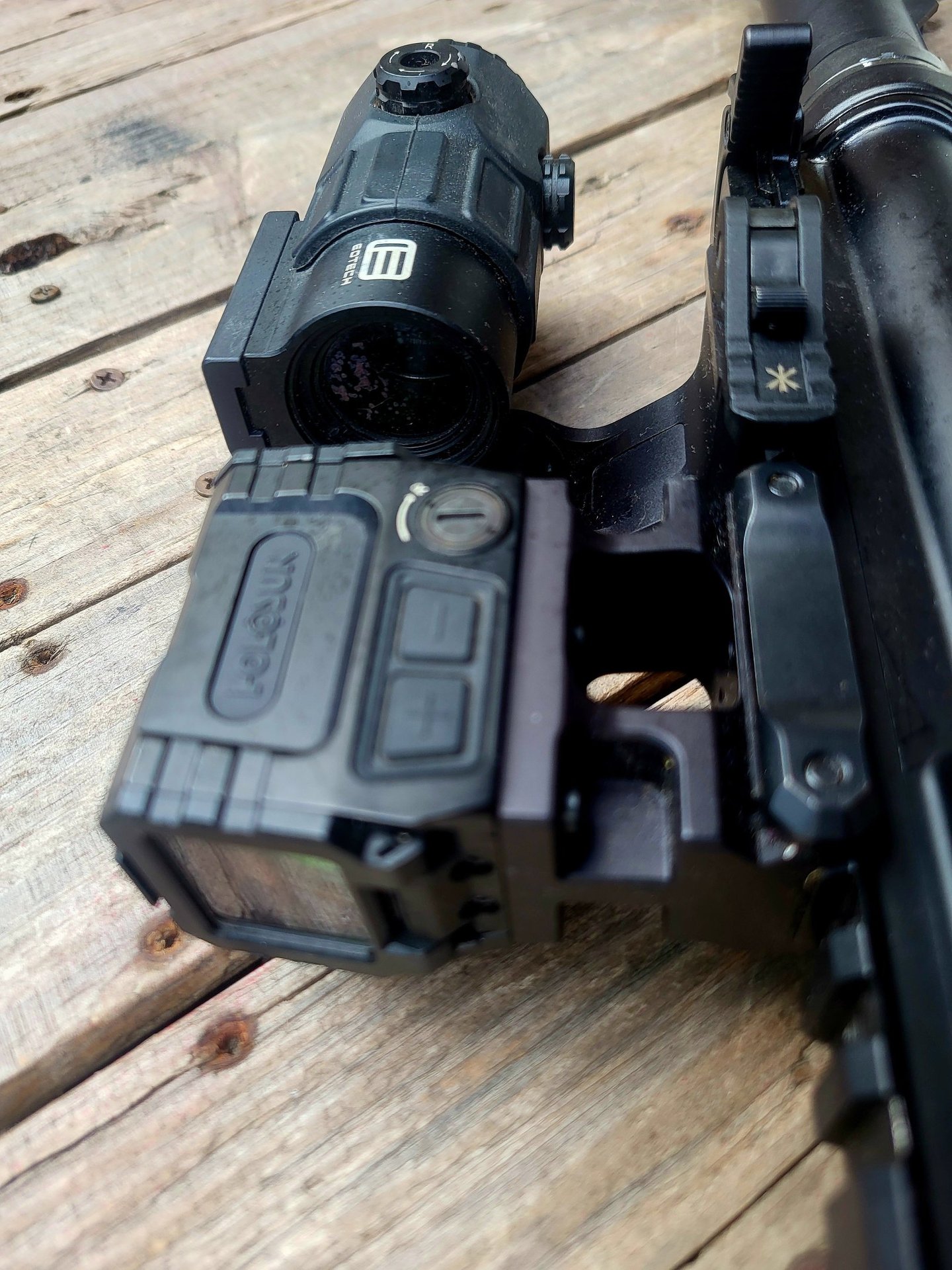
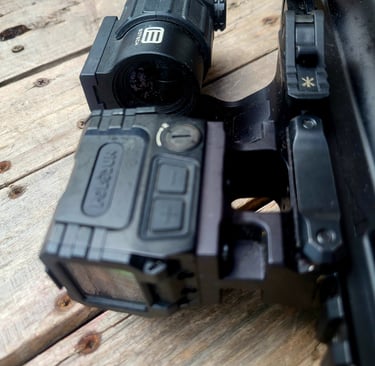
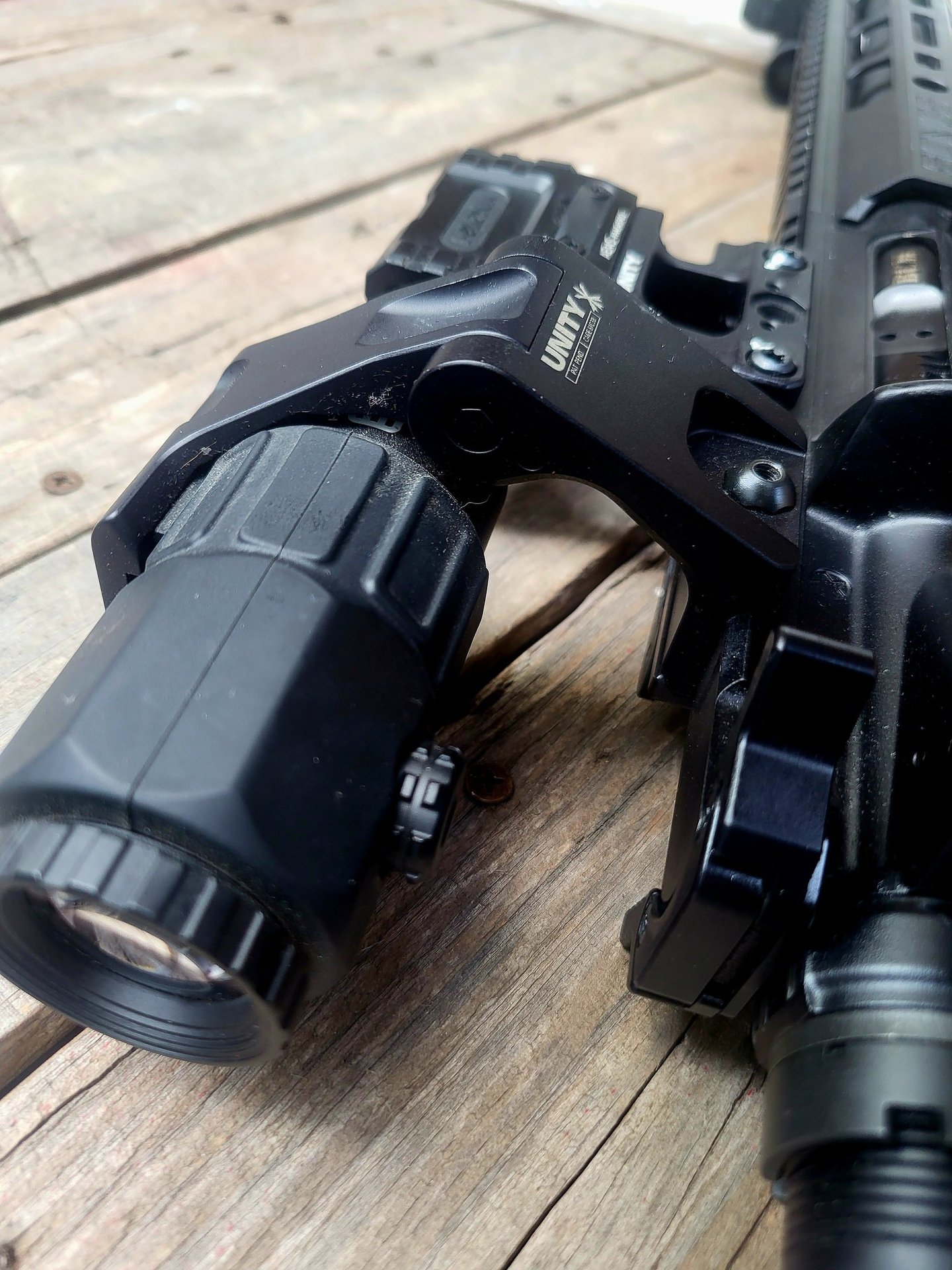
Eotech G33 & G45 line up are considered by most, myself included to be the best when it comes to magnifiers specifically. The crystal-clear durable prism is encased in a tough alloy shell with a thin rubber like texture surrounding the majority of the body & have a long reliable track record. Magnifiers in general have a highly reduced eye box compared to its paired optic counterpart & these two models are no different. The G45 has the smallest eye box but offers the user 5x magnification over the G33s 3x. Lots of individuals opt for the G33 model due to its a bit more forgiving when looking threw it but I chose the 5x offering & looking back I'm happy I did so. This particular builds ideal engagement distances is 5-400 yards ballistically speaking & the environment it will be used in the most are nighttime, in short confined spaces & in urban or thick wooded environments. Naturally this platform could stretch out its engagement distances past my 400-yard end cap, especially with a 5x magnifier but I don't want to actively build towards that. My reasoning behind the G45 over the G33 is the magnification is really only to be used as necessary meaning if I need to gather some data or make an extended shot. Both of which I should have time to get my magnifier into position & achieve a proper sight picture. They are not meant to be utilized in a run & gun fashion so, I may as well get the extra information the 5x offers if I'm going to take the time to use it.
The G45 comes with a quick detach flip to the side mount that allows the magnifier to hang off the side of the rifle when not in use & when needed the user pushes it towards the rifle and it locks in place lining up with the optic. This is handy but when not in use that magnifier can be a bit of a snag hazard which would be actively working against one of the primary environments this will be used in. This along with our red dot mount will need to be replaced for a more secure streamlined option. Unity Tactical makes a unit for magnifiers called the FAST Mount that allows it to flip to center instead of out to the side keeping the entire package more compact & less of a snag potential. It's meant to be paired with the optical mount also labeled FAST & while in use, the magnifier sits up co aligned with the red dot. Then when not in use in pushes downwards towards the rail of the upper resting underneath the optic allowing it to be used freely unobstructed, mostly...
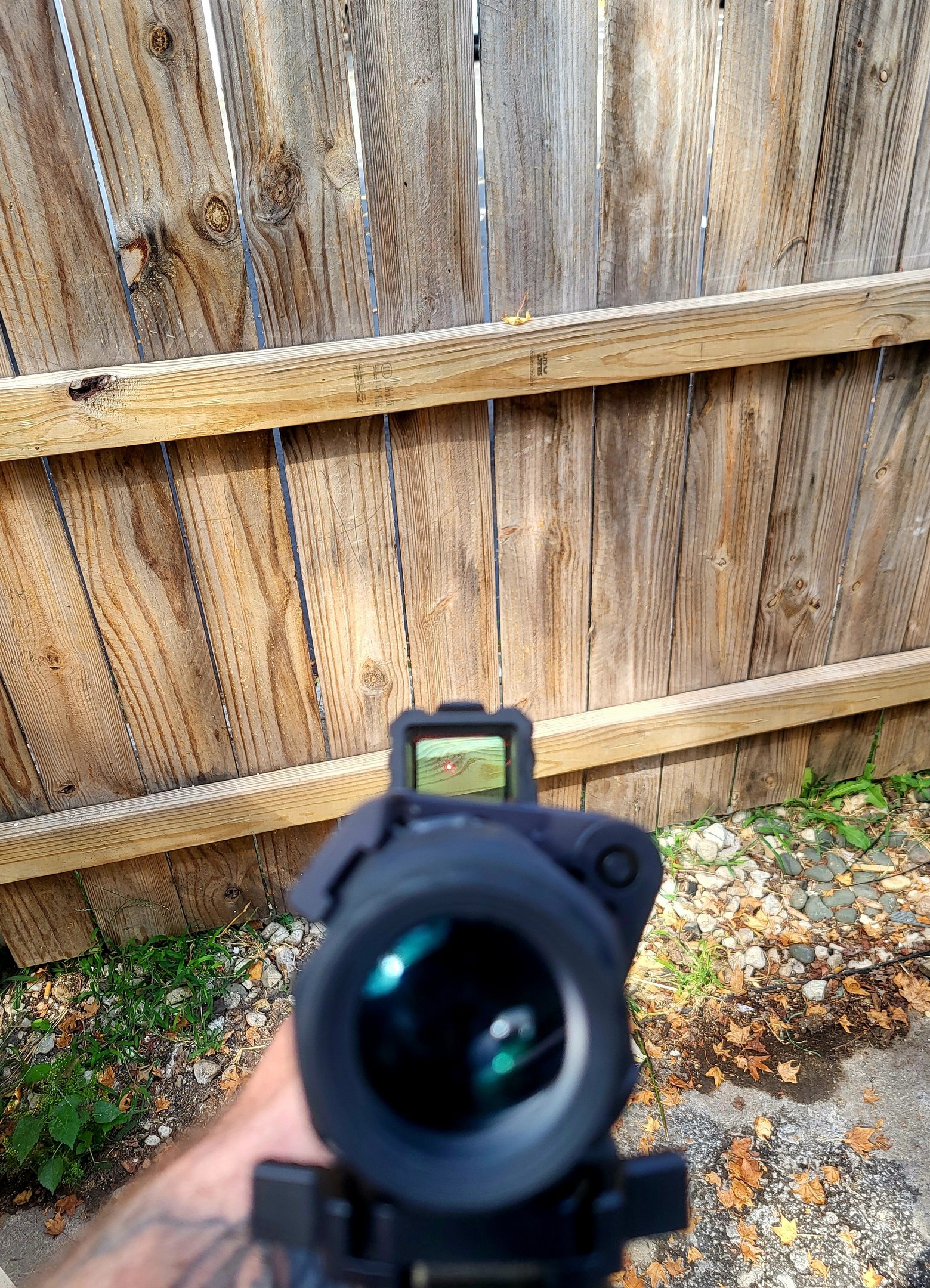
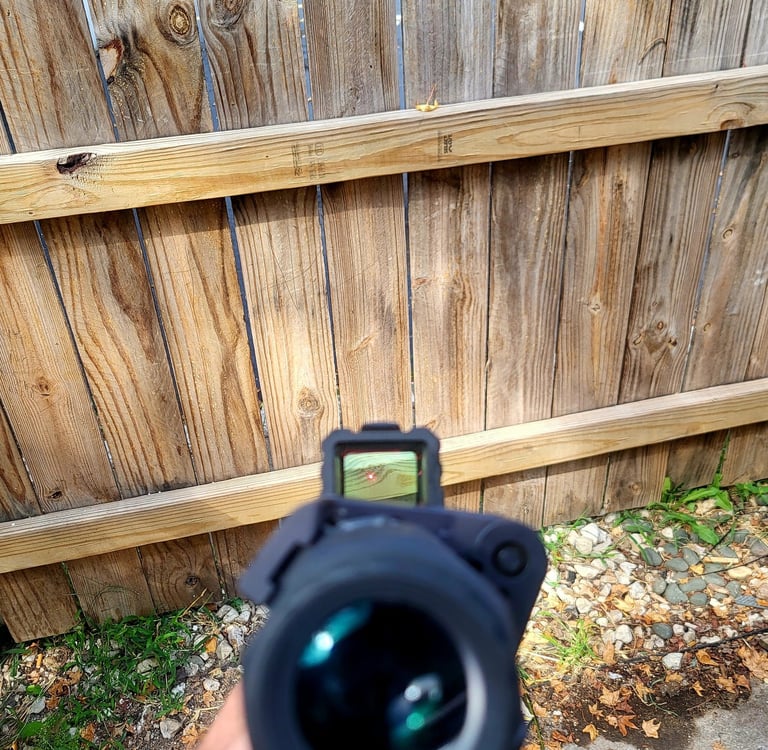
The Unity FTC FAST Mount when paired with an AEMS using their optic FAST mount, even when perfectly allied behind the optic obscures 10-15% of the optical window. Now I could have missed this similar to how I did with the parallax issues; however, at that time I went back on their website to see if they mentioned this anywhere at all & found nothing. They have since fixed that problem with their new updated model, but I was very disappointed not knowing this beforehand. I'm sure someone had made a video going over this detail, but videos often get lost in the algorithm & this detail should have been highlighted on the manufacture's website at the time of release. This is an optic specific mount, so they had to have seen this while making the damn thing...
Sorry I rambled there a bit. In the end this OVERSITE by the manufacture isn't the worst thing in the world and it still leaves the optic completely useable. More so as you invest time into the platform. Plus the biggest reason for the larger window was NVG use, during which time I can simply remove the magnifier off the rifle all together and stow it in a pouch thanks to the quick disconnect built into the mount. Which is nice since I can make the entire rifle lighter as the situation allows.
Both FAST mounts bring their prospective optic up so 2.24" above the rail of an AR-15 which brings the optic to 3.49" over the bore. This admittingly is quite high even though there are higher options, however that doesn't make it an outright negative. Mechanically speaking it's no different from any other rifle and can perform all the same tasks, the issue most people run into its usability specifically when trying to achieve a proper cheek weld. That & just not knowing their hold overs but that is a user skill issue & not a problem with the height of the optic itself. I have a larger head than most & still not able to achieve a proper cheek weld without the help of some sort of riser on the stock/brace. But I can get a solid chin weld when needed making it completely useable for me anyhow & the extra height does come in handy a good bit when using NVG or a gas mask making it almost perfect for this build if it wasn't for that DAMN SIGHT PICTURE BEING BLOCKED...
It's funny how much of a rifle you could assign to the human body with a little bit of creative thinking, but we will skip over that. Handguard selection was next on this build map & thanks to our use case; the importance of a solid extremely well-built free float handguard cannot be understated. Not only does this ensure our barrel has 0 outwards pressure on it from any angle which would cause our rounds to be off target when fired, but it will also eventually be host to a Laser Aiming Module. And just like our optic, lasers need to be zeroed & remain at that exact location for it to have its desired effect. Handguards are not the most ideal place mount a laser due to the way it attaches to the rifle leaves room for error & isn't a solid nonmoving platform like the upper receiver. Basically, all handguard when fired will have some flex to them, having a slight wobble in the moment of firing before coming back to rest largely in its original starting location. I say largely due to some handguards and barrel nuts don't have the most secure locking system & when fired the handguard will whip around & when its back at rest will have slightly shifted from its original location from which the laser was zeroed.
The handguard not coming back to rest at the exact location it was prior actually isn't that big of a deal due to the design of the AR-15 allows for some loose tolerances as long as it or anything else is not in contact with the barrel. Until you add some sort of aiming system on it does the need for rigidity & a rock solid lock up come into play. Finding a handguard with said solid lockup isn't too hard if you're not worried about length, but I specifically went with the 12.5 over the 11.5 because I wanted a bit more length than the 10.3/10.5 offerings you typically see. The handguard can't be more than 12" max otherwise I run the risk of the gas from the muzzle device destroying it & it would also interfere when trying to mount a suppressor to the barrel if i decide to go that route. 12.5" barrels are already an odd ball out when it comes to options & aftermarket support so finding a handguard that's both sturdy & between 10.5 & 12 inches in length will be a challenge.
Pairing a Handguard to the Barrel "The Shaft"
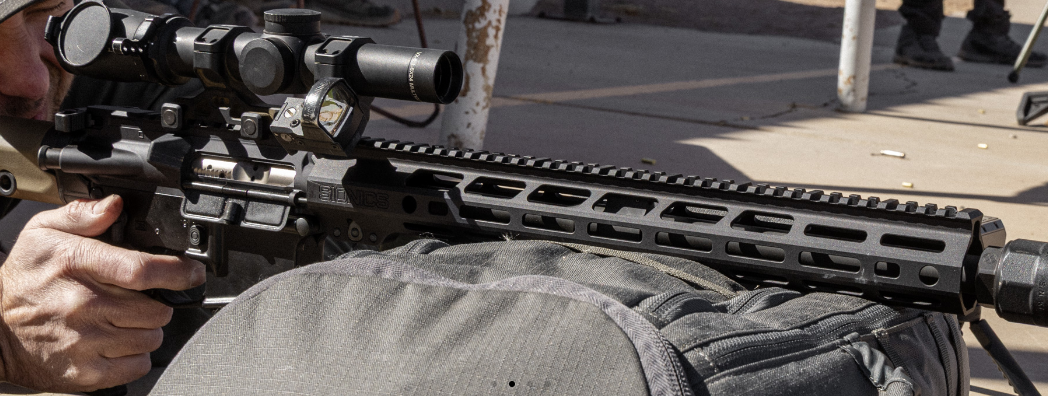
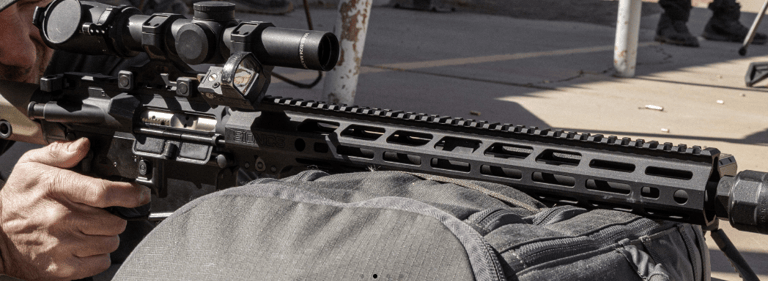
Again, I'll save you the details on all the different options I looked at, but after a fair amount of time & a suggestion from a friend, I found a 11.8" long, Free Floating Handguard, with a solid mounting system & 4 quick detach sling mounting holes built into the handguard itself from SIONICS Weapon Systems. Comes with a titanium barrel nut which will be amazing for handling heat as well as overall strength. Being .2" shy of 12 would give me the perfect amount of wiggle room when selecting my muzzle device & possible suppressor ensuring there is no fitment issues. This would be the option I ended up settling with & looking back it was the perfect choice.
Muzzle Device & Suppressor
I've talked so much about suppressors throughout this whole mapping process, it's about time I knock this detail out as well. And we will start by looking at cans & then muzzle devices since depending on mounting method the two will need to be in compliance with one another. Do I even want a suppressor in the first place? Entire point of this build was to be short, adding a whisper pickle at the end kind of defeats that purpose. Well the entire point of the build is to be user friendly in certain environments such as night, vehicles, indoor structures, thick wooded & urban areas. A suppressor would prove adventitious in those areas plus a 12.5" barreled 5.56 will likely be tossing out fireballs which can interfere with the users NVG setup causing auto gating or just blinding you for the moment. And in the event, I have to fire from a vehicle the can could be useful or get in the way depending on how you look at it.
I think the answer is yes, but it needs to have the quick detach option in some form or fashion, giving me the obvious benefit of having it when I need it and stowing it when I don't. But in the rare event I have to dump a ton of ammo in a very short amount of time, it's likely I'm not going to want that can on there for long. As a failsafe I want to retain the ability to shoot the damn thing off in that case. At this point I didn't own a single suppressor & diving into that world is daunting in itself, so I took the logistical smart choice. My 16" rifle that I've referred to a few times is actually a 14.5 with a surefire warcomp flash hider pinned & welded unable to be removed. The only suppressor that can go on that gun is one from the Surefire RC series line up. And while this build is for my 12.5 having a single can that is able to float between both of my platforms is logistically the right call. Plus the Surefire RC2 & just released RC3 at the time of the build, were solid options that have been tested in abusive conditions with the U.S. Military & are full auto rated. Top everything off at this point in time it was 72 hours after we started getting word of suppressors forms being approved in like 48 hours. The timing was perfect... or was it?
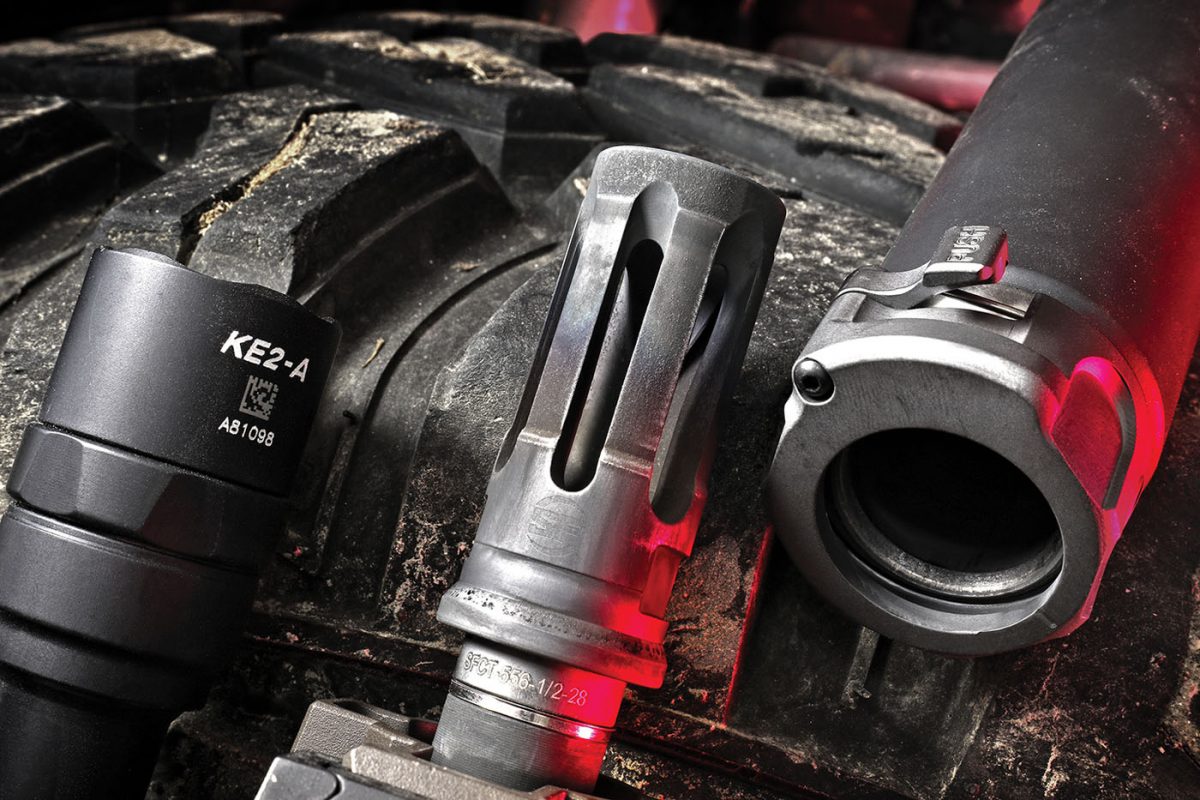
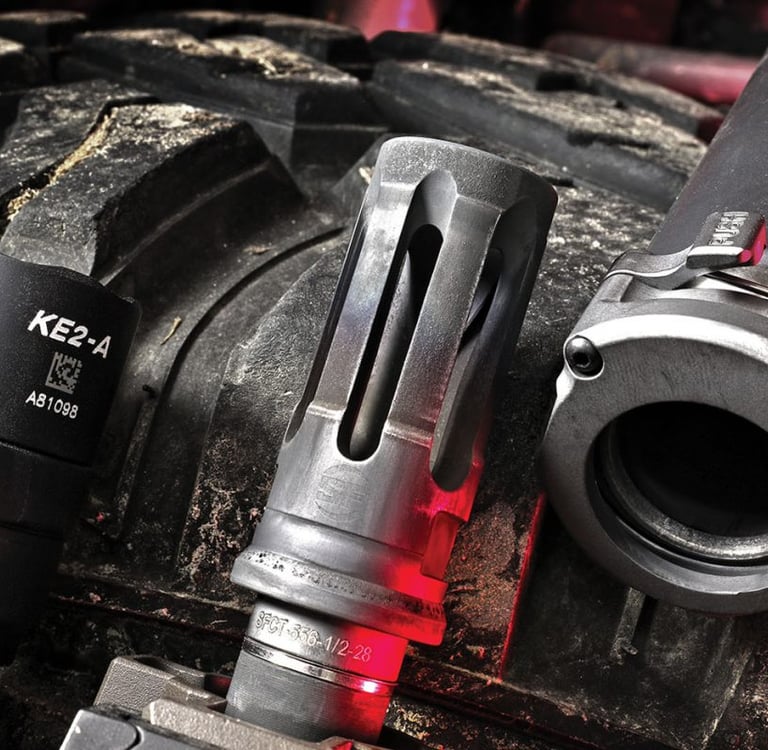
The market was quickly running dry on quality suppressors, soon as word got out that they were getting quickly approved it felt like Black Friday in the late 90s early 2000s. Originally I wanted a SureFire Mini but by time I started my search there wasn't one to be found sadly.
Being burned once already I quickly began looking for the RC2 & RC3 line up, luckily finding both in my search. Unlike my typical routine of spending time comparing each 2 models & felt the need to rush this purchase before they were all sold out.
Ended up going the RC2 primarily because I knew what I was buying. Low pressure printed cans like the RC3 where still brand new at the time & I wasn't completely sold on their performance or longevity. Luckily for me a week or so after I made my purchase, all kinds of videos started dropping about the RC3 dishing out fire balls compared to the RC2 model. I have no idea how big the difference is but did feel better about my choice while I waited for my approval.
And wait I did. While filling out my paperwork I decided to go the One-Shot Trust Route, having zero idea that all trust forms were still taking the typical 1-year long time frame... That sucked but there was nothing at all I could do at this point besides wait & continue the build. Muzzle device selection was next, and this was a fairly easy choice for me. Surefire 3 prong War Comp would allow for the RC2 I was waiting on to quickly attach and detach thanks to their mounting interface. And while the can is not in use, I have a really good flash hider with a slight comp to it.
Peekaboo... I See You
Everyone has their own opinion on the matter, but in my mind all rifles need a white light, even more so as a civilian. I could spend the next 10,000 words going into details on why they are important, but instead I'm just going to touch up on two points that I think most people can relate to in some form. For starters, everyone should but civilians especially need to know what you're shooting at if that time actually comes. Technically speaking I can hit a target out to 50ish or so yard with 0 sights on a rifle fairly easily, in fact most people can within about an hour of trying. I've taught a few classes proving this point a few times over. Put a white light on that same sightless rifle & now there is no realistic environment were that rifle doesn't have the capability to make lethal hits out to a minimum of 50 yards potentially more depending on the user.
Now take that same rifle, remove the light & add any optic of your choice to the platform. Excluding the oddball micro thermals and similar offerings due to those are what I would consider a nesh optic. If I was to place you in a dark environment with your bomb proof optic and tell you there's a guy with a knife closing the distance, you and anyone else would be in a bit of trouble. Perhaps you may end up hearing their general direction and get lucky during a spray & pray but not only are you not guaranteed to hit your target, you now have a ton of rounds unaccounted for. And if you don't plan on going out at night, well, you may forced into that situation at some point or you may end up running into my 2nd reasoning a gun needs a light.
Shadows & light barriers are everywhere at all times of the day, even more so if there are artificial structures anywhere in your area of operations. I've done private security now for over 15 years, doing every job you can think of. From mall cop type of work at a groceries store, high security structures & facilities & executive protection detail for individuals like judges or celebrities, I've done a bit of everything. Once common theme of security works no matter what the contract details, is foot patrols as I'm sure you can imagine. And it is absolutely wild sometimes how shadows or light barriers will either trick you or completely block your vision. There have been many many times almost routine really where I will be in a very well-lit environment & come across pockets of just pure darkness. Or vice versa, being in dark environments with patches of light will create barriers and shadows within shadows. It happens way more than individuals realize.
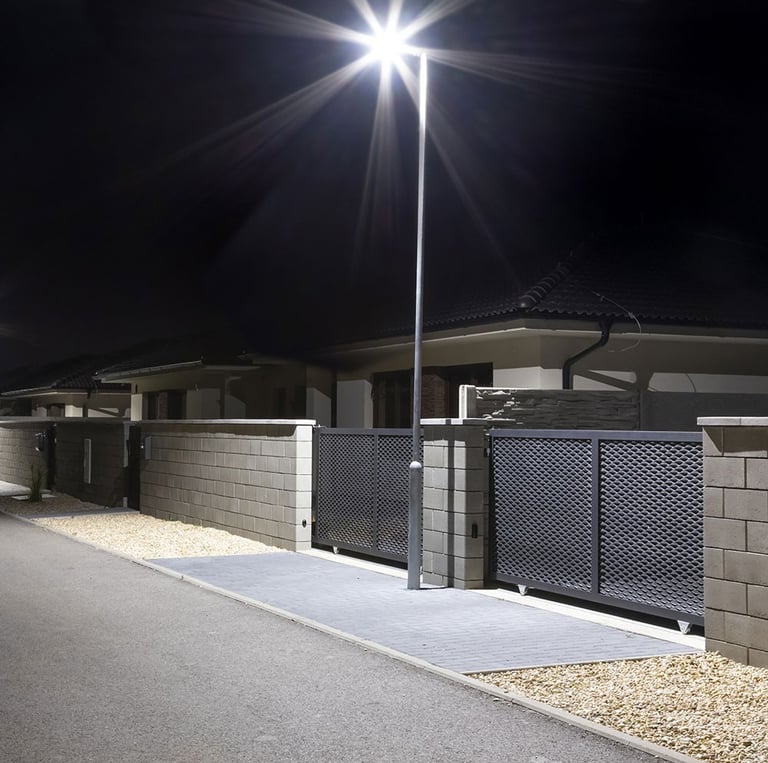
Streetlamps at night are an easy example of this but similar situations happen at high noon as well. Plus, humans are fairly predictable, if there is someone in your environment looking to do harm, they tend to stick to darker areas when alone or in smaller groups. And even not, if you believe you may be in a dangerous area, being able to simply shine a light in a darker area to either confirm its empty or deal with the situation you find is a lot less problematic than firing some stray rounds in said area, going around it completely or just wishing for the best of luck. And as cool as NODS are, they won't be with me all the time more than likely & may not be that useful depending on the situation or environment your find yourself in.
Everyone's free to do their own thing, but yea there is an argument to be made that a light is more important than an optic on a rifle. Nevertheless, I will need to make a selection for this platform & thanks to my prior mentioned work life, I already have a decent idea of what kind of light I want on there.
Lights are primarily broken up into 2 types. Flood (Lumens) & Throw (Candela). It gets way deeper than that, but that's enough to understand my decision. Personally, I'm a fan of high candela output flashlights with the ability to light up an area 300 yards away. They typically struggle to light up a wide area but make up for it in other ways in my opinion. For one its the only kind of light that's going to really be effective when trying to defeat light barriers.
Back to our street light scenario, imagine you're standing in the shadows on one side of the streetlamp & you want to illuminate the area just past it, threw the light being put out by the streetlamp. You're going to need a powerful beam strong enough to push through that light & still have enough power to light up the area desired. It also lets you check out those pockets of shadow from a greater distance. And in a similar fashion, you want enough illumination to properly ID whatever it is your looking at. Yes, you may be able to see the guy 100 yards away, but can you see and confirm what he is doing or what's in his hands? Being able to see clear details of your target & around your target is required in my opinion. There is also the added benefit of using the light as an offensive & defensive tool. Being on the receiving end of a 100,000-candela rifle light is not only just unpleasant but disorienting as well. In an environment where can milliseconds matter, hitting an individual with a spotlight will likely buy you 1-2 seconds of time. And if you have a teammate or partner with you of some kind, a spotlight in the face of the suspect can actually conceal your teammates movements allowing them to get a better angle without the suspect being aware.
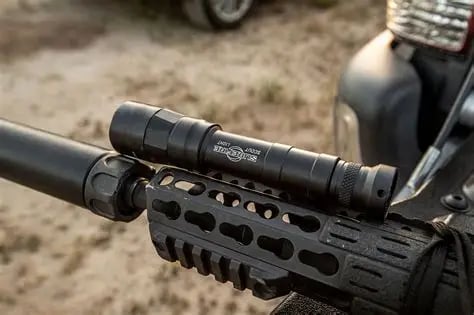
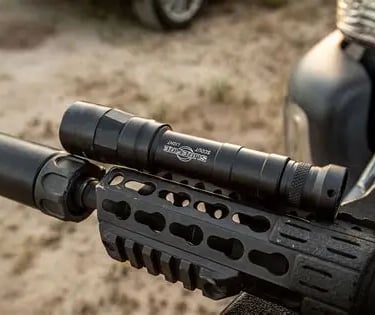
Now that I've explained why I prefer a flashlight with a long throw, which light specifically? Currently the market has a decently wide selection of high candela units that are all roughly the same when it comes to performance output. Whatever my choice is, it will need to be built like an anvil. Due to my longer arms & hand placement on the handguard, the head of my light is going to be sitting right next to the muzzle slightly past it. And if possible, be able to use both an 18650 & CR123 battery. There are many great options on the market, but I ended up going with the full-size SureFire Scout Turbo primarily due to its durability & its ability to run on either set of batteries. Streamlight was a close second, but if I recall at the time they didn't offer a high candela model sadly.
For mounting methods I chose SureFires Low-Profile Mount for rigidity & in order to reduce snag potential as much as I can. A common failure point on lights are the mounts, so making sure mine was robust was key. It also allows you to fine tune the lights angle on the rail itself which will be important since I will not be using any tape switches.
Tape switches & other wired control units such as the Unity Hot Button, allow the user to add an activation panel to the handguard giving control of devices such as flashlights and laser aiming modules all in one section. These switches can be extremely useful & sometimes necessary depending on certain factors but come with a host of wires that the operator will have to manage. Wires are a snag hazard no matter how well they are stowed, plus I actually prefer running just a standard tail cap on my lights. I utilize a C clamp style grip with my support hand, so as long as my light can be placed in the 11 o'clock position & far enough forward, it makes activating the light very intuitive.
Mary Had A Little Lam
Laser Aiming Modules aka L.A.M.s, provide the user with a 2nd aiming solution in the form of a laser that guides the operator to his target without looking through their optic. There are many different kinds of LAMs that have different capabilities & for a good bit I floated the idea of either not running one at all or just getting an IR Illuminator (basically a 2nd flashlight that shines light in the Infrared spectrum}. My reasoning was in America at this day in age, everyone as IR capabilities in some form. Almost all security cameras including the cheap doorbell ones on Amazon, can see IR lights & lasers. Digital Night Vision, while not possessing true real time footage, are very cheap & more than capable of fulfilling roles like sentries & guards very well. The ability to freely use IR lights and lasers while going unnoticed is highly diminished. The use of NVG & other similar equipment biggest advantage isn't necessarily the ability to see and operate at night, but it's the ability to do operate while going undetected and/or taking your target by surprise. Becoming proficient with passive aiming was my mindset & I still believe it will be and should be practiced more in the future because of said reasonings. As time goes on, technology gets cheaper & what was once a superpower reserved only for the few, is starting to become as common as a cell phone.
After getting some feedback from people with real world experience in this type of scenario, I ultimately decided that I did need a LAM. The reasoning made perfect sense, if you've been in a gunfight under NODs which I have not. While going unnoticed & getting the jump on your target is the goal, its only half of it. The other half is winning that fight once it has begun. After the surprise element is over, speed, precision & violence of action is now the name of the game. Ideally you will still be in an environment where your enemy has less vision than you do, in which case anything that will increase that power gap between you, will only work in your favor. LAMs absolutely do that by giving the user a faster aiming solution as well as increased vision clarity depending on if the unit comes equipped with an IR illuminator. So now I just need to decide on which model was right for me and my situation.
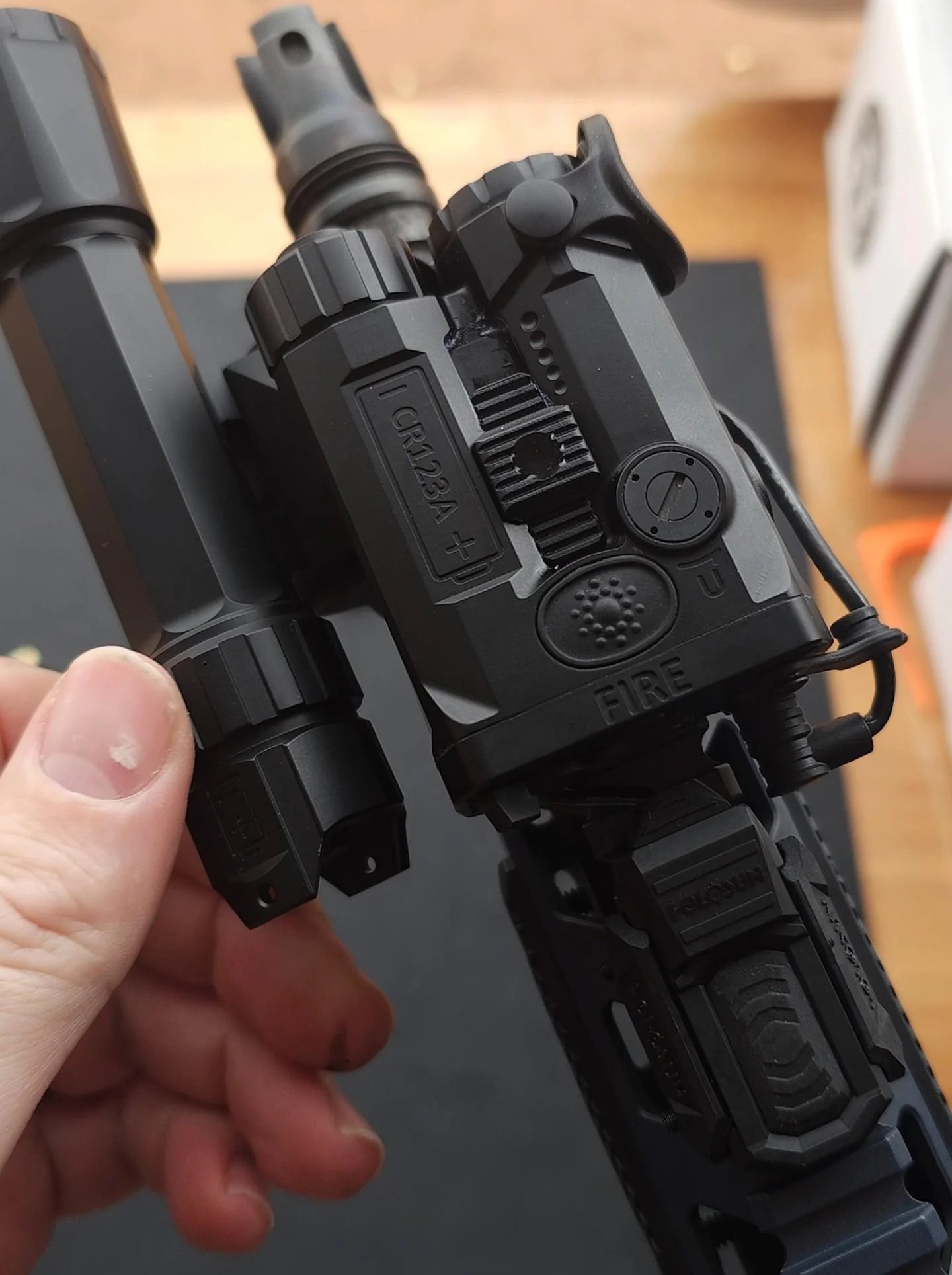
At the time of planning out this build, the civilian market didn't have much to offer. I wanted something that actually had a good illuminator on it as well as a decent laser. Problem is almost all options on the market have an illuminator that's just complete dog shit, barely illuminating anything that I could already see passively with my PVS-14. And whatever I pick, needs to be sturdy & reliable enough to hold zero. Some of the newer offerings on the market labeled as "airsoft" LAMs, may actually have a decent illuminator, but after a few hundred rounds on a 5.56 gun the laser can no longer hold zero. Defeating the entire purpose of the device itself. Yea I could have dropped 2k for a D2, but the idea of paying that kind of money not only for an item I won't use all the time, but a piece a tech that's frankly outdated was just hard to swallow. It's also renown for having nobs and buttons break basically right out of the box. And while their illuminator is very nice, the damn thing is also a brick on the end of your gun. Just a massive, heavy, square putting all of that weight in the one spot you don't want it & becoming a snag hazard in of itself.
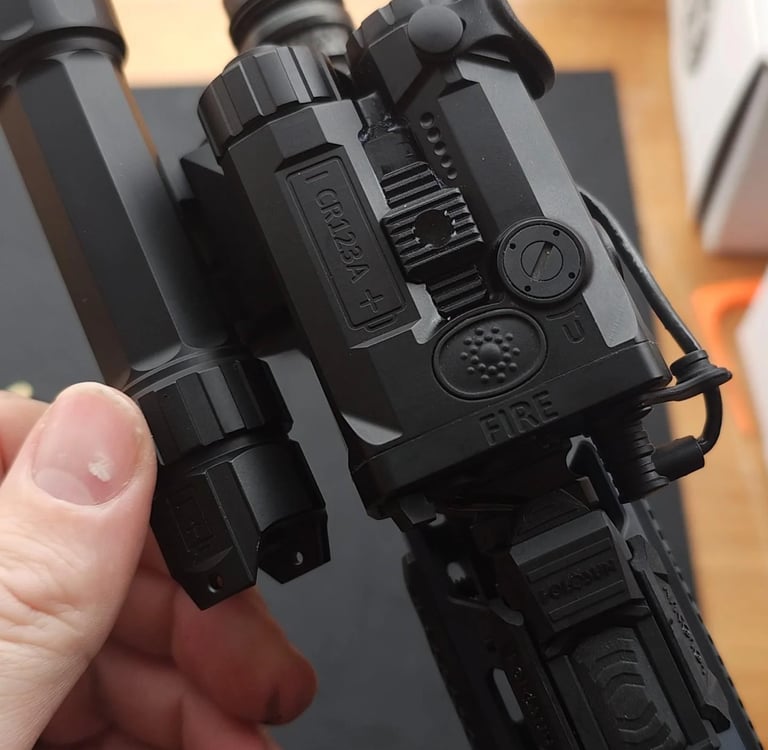
In steps the Holosun IRIS. Specifically, their IRIS 3 model coming equipped with both a daytime visible laser, an IR laser & a really good IR illuminator. The entire package is so small it's a bit of a mind trip when you hold it in your hands for the first time. Just a smidge wider than most free float handguards, has very intuitive controls & the entire thing is at a very reasonable price compared to other offerings with half the features or 3 times its weight. This isn't Holosuns first rodeo when it comes to lasers & their first few models have been widely tested over the years proving true. I'm fairly confident that this offering will be no different, but there was one problem. The unit was just announced at that years Shot Show & wasn't going to be released for 9 months which ended up getting delayed another 6-9 months.
After poking threw some other options, some of which looked quite promising, I decided to go ahead and wait for the IRIS to be released. After all this was only the planning stage & while I had been saving the entire time, I still had a bit to go. By the time I had planned everything out, purchased & built the rifle, hopefully the IRIS would be released at which point it just simply adds on top of the rail of the handguard.
ATF Is Gay
Once I made my LAM selection, I moved all the way to rear of the gun. Here I had a large decision to make. With the barrel of this platform being under 16", if I were to attach a stock to the platform it would be considered a SBR or Short Barreled Rifle. Requiring me to pay a tax stamp to the federal government, get approval by the ATF to attach the damn thing to a buffer tube, & get permission from the ATF any time I want to take it across state lines, all of which is GAY GAY GAY. I live on a state line in one state, & a good buddy of mine whose range I use often lives 30 miles away in a different state. Even if I was ok with paying the tax stamp and getting permission from the ATF to build an SPR, which I'm not, realistically it would be impossible for me to legally take it over to said buddies' range. Requiring me to submit a written request anytime I want to take it out for a weekend shoot. Thats obviously not happening, so I was forced into the pistol brace route.
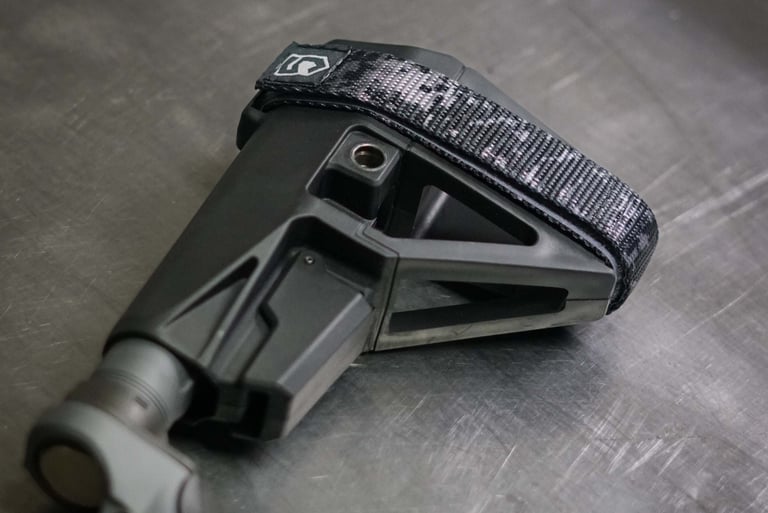
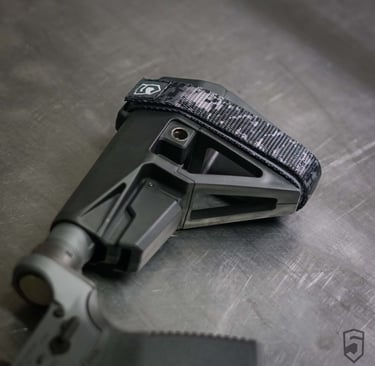
Similar to suppressors my knowledge on pistol braces isn't very extensive. I'm not exactly sure what constitutes a braces vs a stock in the ATF eyes, hell I'm not sure if anyone at the ATF even knows. Their likely just going off the previous guy's rule book & no one actually knows a damn thing, but I digress. I figured the safest & most reliable route was to go with the company that got braces approved in the first place, SB Tactical. At the time the SBA5 had just recently released, & after looking over it a bit online I figured it was as good as any other choice I would find. Honestly, I'm not too picky either way & can make mostly anything work long as I have something there. Thanks to the optical height I have chosen, a stock with an adjustable cheek riser of some sort would be ideal just to help get a proper cheek weld. Same thing can be accomplished with some foam and 100 mph tape, even on a brace. However, I'm not sure on the legal ramifications such actions would have & with the overloads at the ATF acting as random as they do at times, I'll just leave that be, for now...
I'm A Peacock, You Gotta Let Me Fly
The rest of the build is basically just personal preference & largely isn't necessarily specific to the optimization of a particular role or set up. I could substitute any of these parts out for something else and largely be unaffected or even notice, but I'll give you the quick and dirty. The buffer weight & spring will have the largest impact on the rifle, so I'll start there.
Like mentioned prior, 12.5" barrels are typically harder to properly gas to run both suppressed & unsurpassed. ROSCO & Aaron from Sage Dynamics believe they have found a sweet spot to solve said issue without the need of any kind of adjustable gas block, BCG or the need to swap out buffer weights. And since I was curious enough to buy the barrel & dedicate a build to it, I figured I would start off with a standard H2 buffer weight & then make any changes from there if needed. For the spring, I decided to try out a Armaspecs' braided buffer spring. I really wanted to try out JP Enterprises silent captured buffer spring system & likely will do so in the future but like I said I'm really curious on this "patrol length" gas system.
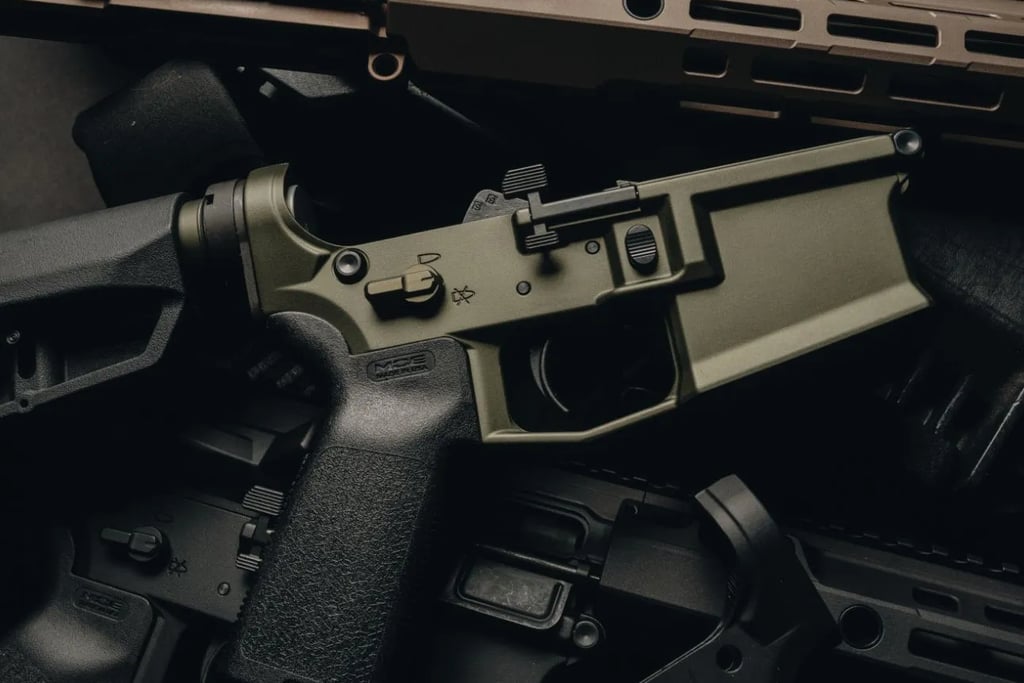
For the upper receiver I didn't see the need for anything fancy, but it being the component my barrel & optic will ultimately be attached to, I wanted to make sure everything was properly in spec. BCM was an easy pick fitting my needs to a T. For the lower receiver I could have gone with a poverty pony (R.I.P. Anderson) & likely have been just fine. However, with this rifle being one I plan to run while under night vision, I figured one with a built in magwel may be a good idea. Long as it wasn't just obnoxiously massive. My 16" utilizes an Aero Precision M4E1 lower which has a small but useable magwel & I think it would fit this build perfectly. It also has the added perk of being slightly easier to assemble but that's really neither here nor there. Far as my gas block selection, I had completely forgot about it until I began assembling it & realized something was missing. Quick trip to my local parts store was able to save the day on that one but only had one selection. Beggers can't be choosers so the YHM low profile gas block was mine for the taking & honestly I could have been left with worst.
Eat That Blowback
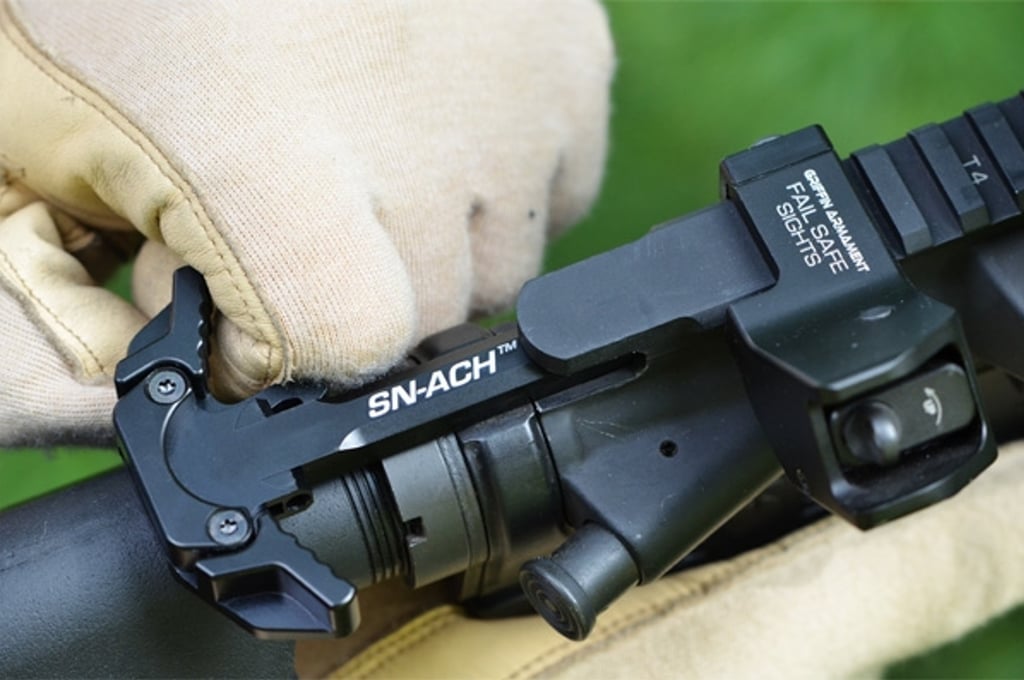
I don't really have a personal preference when it comes to charging handles largely & am perfectly content with running just your basic mil-spec version most of the time. Nicer ones can absolutely be more convenient for sure & that's largely it, but they can be borderline necessary which may end up being the case here. Even though I didn't own a suppressor yet, my buddy did already own a RC2 which I had played with a handful of times. Few of which included shooting it without a charging handle that was designed to help vent the excess gas away from the face when using a can & while still usable, it sucks. Not to mention very unhealthy especially if you shoot a good bit.
We also need to consider our optic placement on the upper receiver & if we will have enough space to actuate the charging handle. This is a little harder to do when you don't have the rifle & optic in hand to test out eye relief, but we can make some educated guesses. Our G45 magnifier has 2.6" eye relief on paper & I know from my past rifle that I genuinely have to run my stock or in this case brace, fully extended to achieve a proper length of pull. Meaning I'll likely have to run that optic at the most rear section of my picatinny rail, if not close to it. The Unity FAST FTC mount utilizes a QD lever on the support side of the rifle since I'm right-handed & that QD can be a bit bulky. A charging handle with extended latches would make things fairly easier, plus they largely get used when the operator experiences a failure of some kind.
I did some digging & saw a ton of hype over different versions of charging handles offered by Radian Weapons, specifically for their gas redirection properties. I was poking through their selection, when a video for the Griffen Armament SNATCH popped up in my YouTube feed. Similar to Radians offerings, the SNATCH was also designed to aid with blowback & comes with extended controls, but at half the cost. And with a name like that I had to at least give it a go. So, for better or worse Griffens SNATCH (V1) would be mine.
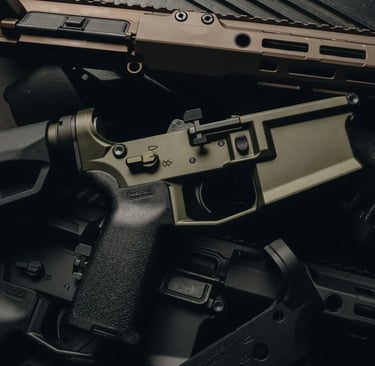
Now unless I'm doing some real long-distance shooting, having a super crisp high-end low weight trigger just isn't really needed. Long as its repeatable and has a moderate pull weight it's good to go in my book. I do prefer a flat face shoe over the standard curved model but that's about it. LaRue Tactical makes an extremely clean trigger that punches way above its weight as far as performance goes considering the cost. Toss in the fact that they go on sale all the time, it makes it really hard to justify not adding it to this build. So I added the MBT-2S Flat Face Trigger my list.
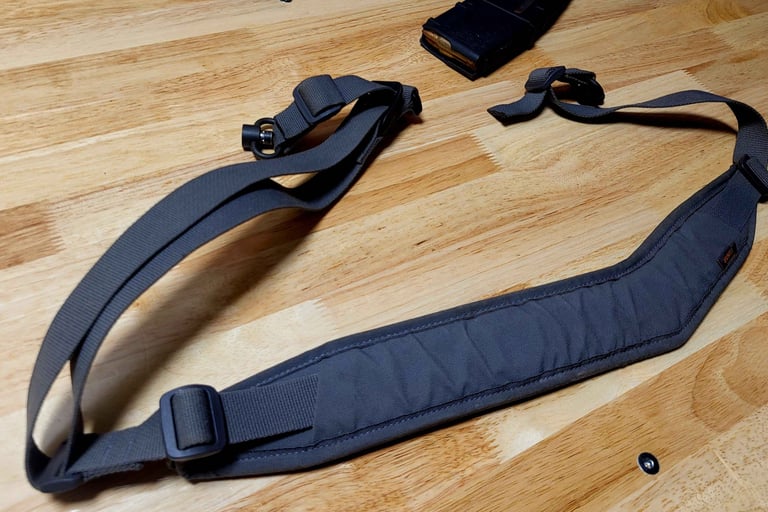
Grip is another thing people get really particular about but honestly, as long as it has a little compartment for a bottle of oil, I'm a happy camper. I think the one I ended up picking up was the Magpul MIAD Grip Kit (Gen 1). It's super modular coming with a handful of different backstraps & whatnot, but most importantly my favored compartment as well. For my safety selector, again, could have been mil-spec with 0 issues but I was at the Badger Ordnance warehouse in Kansas City picking up a component for my 16" & noticed their Condition 1 Full Auto Safety Selector. Super modular like everything else now adays, able to be converted into a 60 degree throw if one wishes & a bit overpriced to be frank. But it has a small red arrow on it indicating which selection its currently on which just looks super clean in my opinion. Lastly, I needed to snag me a sling. After checking the spare bin with zero success, I looked around a bit and saw Lunar Concepts Contoured Padded Sling. Honestly, I was a bit unsure on running a padded sling, but I heard nothing but very positive reviews on it. In the end a sling is a sling, long as it holds my rifle in 2 points, I can make it work.
And that about coved it for mapping everything out. I'd pick up the odds & ends like a lowers part kit, angled grip & end plate next time I was at the gun store, or when I placed my order for all the parts.
Pony Up
Now came the not so fun part of paying for everything. I decided the best route to take would be to save until a big holiday sale and then buy it all then, ideally saving me a few hundred dollars by the time it's all said and done. All except the RC2 Suppressor, which I purchased immediately once word got out about fast approvals. Memorial Day was a few more months away & generally has really good sales on firearms & components.
Memorial Day came & went. Sure enough, I did end up saving about $420 & ended up buying a case of ammo with said savings. Once all the packages arrived, I began assembling everything I could. I didn't have the proper tooling to attach the barrel to the upper receiver, so I ended up taking that to a local smith in my area. Along with my BCG as well figuring I would get the head spaced checked while he was at it.
While I waited on the suppressor to get approved & the IRIS to finally drop, I played with a few configurations in the meantime. Friend of mine had a Steiner CQB-L he let me borrow, allowing me to get better used to the weight out front & get some practice in doing active shooting at night with it. A Streamlight TLR1-HL I had lying around made its way onto it as well while I waited for the Surefire Turbo to arrive. Obviously nowhere near the throw, however the switches on the TLR1 actually works amazingly well at the 12o'clock, if you use an over-the-top C-clamp grip. Like really, really good. Anyhow, my can didn't get approved until the end of November of that year, giving me a total of 5 months & 900 rounds threw it with no malfunctions other than the first one just spoken of.
During my first range session using the RC2 I dropped another 300 rounds of 55gr PMC X-TAC through the platform expecting to experience something. But the entire session was just as smooth as the first time except without the singular failure. I'm not going to pretend to be some guru when it comes to evaluating how well a system is gassed, but as long as the gun goes bang every time, I'm largely happy. Zero shift was maybe 1.5-2-inch low at 100 yards & I only say maybe because a red dot isn't necessarily the best tool to measure fine details like that. Since this can will likely live on this rifle, I quickly re-zeroed it, after which I switched to target transition drills. The added weight of the RC2 was nothing to scoff at, making a noticeable difference in time. However it wasn't all bad. What was already a fairly soft shooting gun was now just wildly easy, so much so I found myself preemptively anticipating some muzzle rise & overcorrecting in the process. More I pulled the trigger, the more I learned that this gun preferred minimal input from the shooter & even though a tad bit heavier than I would prefer, overall, it's very well balanced & accurate for its given length.
Once all the bolts were fastened, witness marks drawn, & bolt lubed up, I headed out to the range to give her a proper break in. I was still waiting on my RC2 to get approved, so this gave me plenty of time to test its performance without the beloved whisper pickle attached. I ended up dumping about 330 rounds through it over the course of the next few hours. In the first mag I experienced 1 failure to fully seat the round. For some reason the bolt failed to fully seat the next round, only going about 90% of the way. A quick hit of the forward assist fixed everything right up & for the rest of the day it was nothing but smooth sailing. Ended up zeroing the rifle, doing a grouping test on 7 different kinds of ammo to get a better idea on what she favored & then spent the rest of the day doing drills. In the 2 test samples I
The entire experience just felt pleasant to shoot, a very smooth and remarkably unremarkable. Only experience I had with a shorter platform prior to this was a PSA 11.5" that just felt a bit abusive. I mean it's still just 5.56 so nothing bad & I wouldn't say it was unpleasant to shoot just a bit rough. I think I was expecting the same feedback with the 12.5", but that just wasn't the case. Sure, it still had a good thump for individuals to the left and right, it's a shorter platform with no can there's no getting around that. However, I'd say it felt more akin to my 14.5 P&W than to the 11.5 by far, & while too early to tell at this point, in hindsight I attest the softness of this gun to the proprietary patrol length gas system. Another contributing factor could also the overall weight because it's not exactly the lightest system on the market.
The Checkered Line
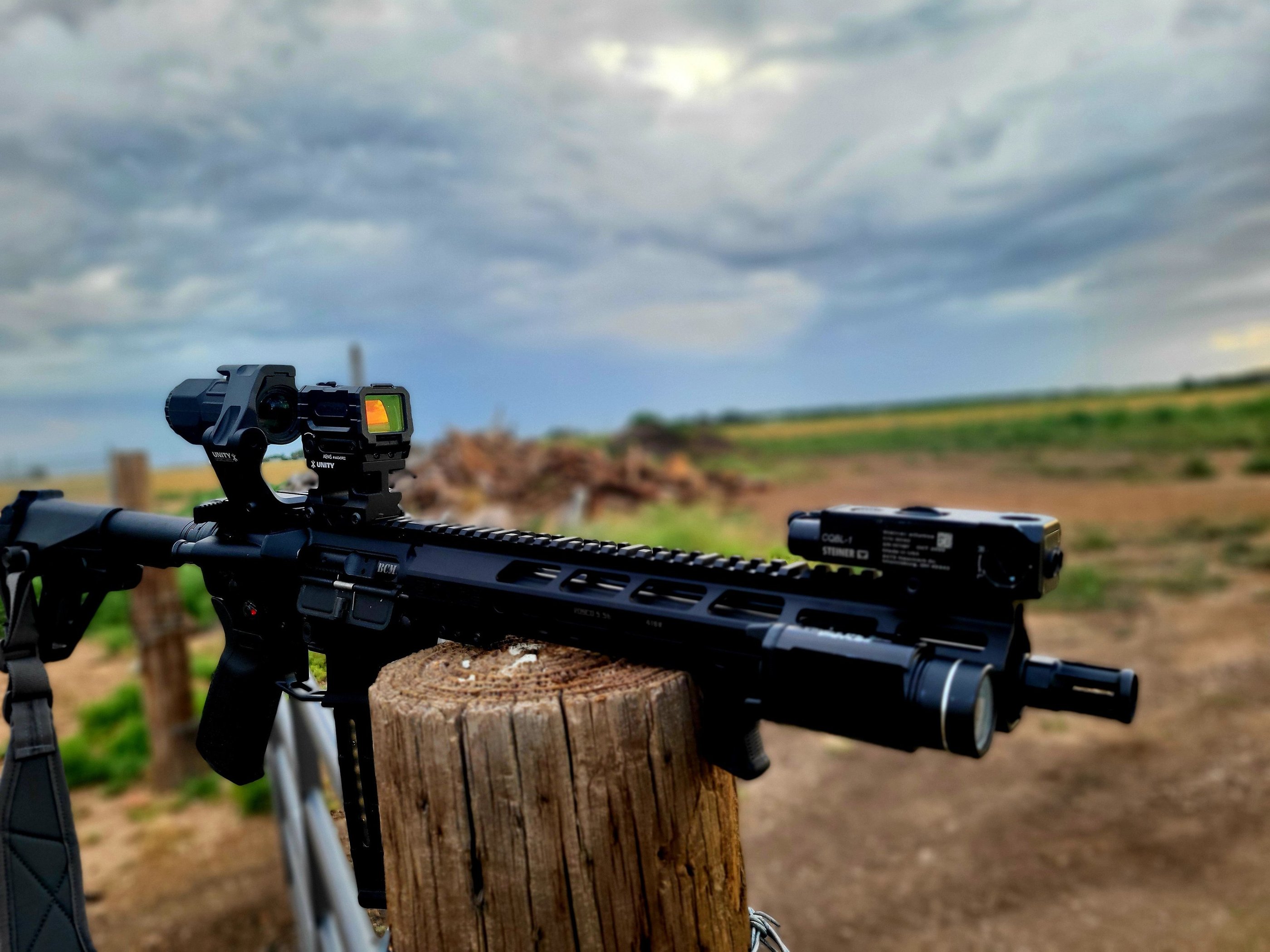
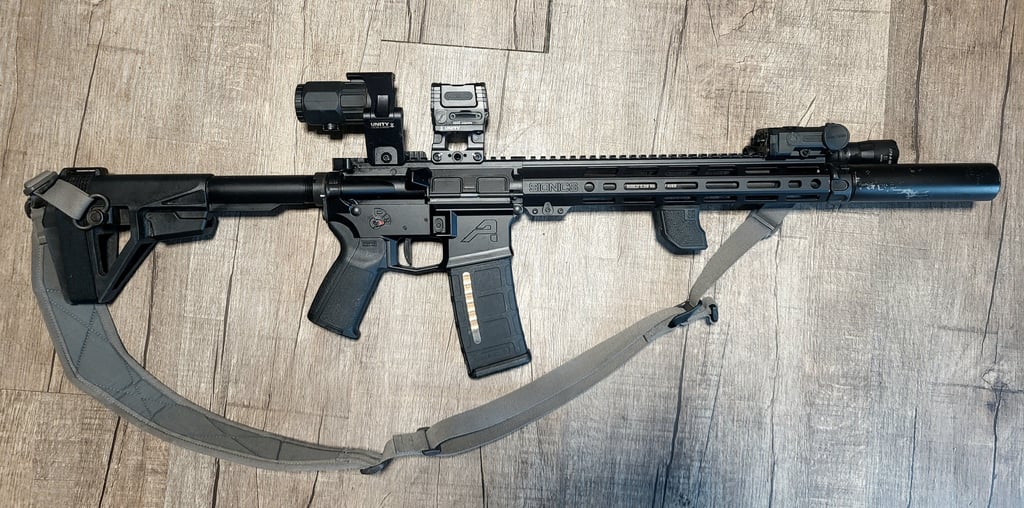
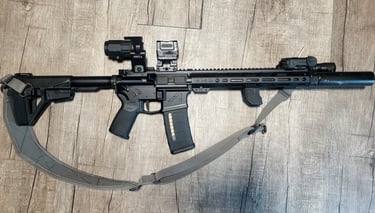
Jumping forward to present day, my 12.5" has panned out to not only be a great rifle for its intended built purposes, but just a really great rifle in general. So much so it quickly became my main squeeze so to speak. Not because it's the best at a specific role or task, but because its remarkably acceptable in most situations & in most environments. I've used this in PCSL 2 Gun matches with great success by simply removing the magnifier & calling it good. The added weight of the LAM & RC2 out front actually plays well with the scoring structure since double taps on this thing are so easy. On the flip side while I wouldn't necessarily call 600 yards long distance, it's a decently fair amount & with a bit of practice this gun is easily capable of first round impacts at that distance & likely more. I'll let you know when I get that good lol.
I'm also pleased to report I haven't had any problems or issues either over the course of 18 months & 5,600 ish rounds. I will say that during the cold season last year I was trying out a new grease & the BCG was a bit sluggish to the point of needing a tap on the forward assist. I fully attest that to said grease & plan on testing that theory out this coming winter at which point I'll update my findings. Rest of the time I've just been running SLIP 2000 without so much as a hiccup. Handguard hasn't budged a millimeter since installation with original witness marks still perfectly in place. And similar to that, the holosun IRIS has retained zero now for around 3200 rounds & a year strait. Thats not really surprising, least not to me, but it's always positive to get some good data over time confirming that.
Personal Fitment
Reliability seems to be solid. I am curious to see how the barrel holds up as the round count increases, especially since it's been suppressed 90% of the time. But time will tell. How about some of the more personal preference choices? Well largely ok, but not perfect. There are a few changes I may end up making & some I'll probably just end up living with. I wanted to make sure I gave everything a fair go before I started swapping stuff out & a year seems about right.
First thing to go will likely be the sling. I was iffy on a padded sling to begin with, so this really is no surprise to me anyhow. Now that doesn't mean the one from Lunar Concepts is trash by any means, in fact if it was about half as wide as it currently is I think I would like it a good bit. But as it sits for me anyhow, it's too wide around the neck portion, specifically when paired with body armor or other nylon equipment. This may just be my personal bias coming out, but with it being as wide as it is, it feels like there is some drag & snag as the sling slides across the back.
Now on the other hand, when not wearing any body armor this may be one of the most comfortable slings I've tried. They really nailed down that contour shape because there are no hot spots on the neck or under the arm at all. The quick adjust pull tab is super easy to use, even with gloves one of my favorites so far. I'll likely end up still hanging on to it because you never know when a really comfortable sling will come in handy, but yea, I'll replace this one with something a bit thinner.
An item I already swapped out was the hand stop. Originally, I had a BCM angled foregrip on the rifle, the smaller one. I didn't really have a problem with it at all, but my local parts store, had one of the Die Free Co Tiger Claw grips on the shelves while I was picking up some metal AR magazines. Their marketing gimmick comes off very shill ish, but I actually like this one a good bit. It has a texture all over each face that is very kin to the "brain" pattern you typically see on handguns that have had the frame sent in for a stippling job. Extremely grippy, without the need of that sandpaper texture. It MAY also be barley long enough to kind of grip and hold like one would if it was a vertical foregrip. Which MAY be handy if & when your gun starts to get a bit toasty from extended rapid fire, even more so with the use of a whisper pickle.
There are a few parts as well that ended up having a couple of flaws, but I'll likely just deal with it given it may be too much of a pain or just too expensive to fix immediately. The SIONICS rail has a small defect in it where the rear support side QD slot doesn't work properly. Even after following their recommended procedures of inserting the QD & twisting it around completely. Admittingly it's a small complaint & if I really want to run a sling near the rear of the handguard, I can always add an aftermarket one to it. Plus, I think this specific handguard now has been discontinued anyhow so if I sent it in, IDK what I would get back.
The Holosun AEMS & its' minor parallax problem is another one I'll likely hang onto for a bit, unless I can manage to sell it off at a decent price. Holosun did recently release the 2nd version of this optic which is supposed to fix the parallax issue, but I'm still waiting to win the lottery. So, until that time comes or I can sell this one off to fund the purchase of the updated model, I'll just hang onto it since the optic is still completely useable just got to be mindful in certain cases.
Conclusive Thoughts
The entire build came out much better than expected. The barrel, while not being the best for long term durability, in incredibly accurate for its length & is cheap enough to keep 1 or 2 spares on hand. The use of a suppressor for most of its life is bound to further decrees its service life, however if it makes it to around the 15,000 round marker, I'd say it's worth the cost. The choice of going with the RC2 over the RC3 was the right call looking back at things. Not that the RC3 is bad, but it has been reported to produce more signature than its predecessor which seems to be a common theme amongst flow through cans. Not sure if it's enough to be a big problem under nods, that seems to be debatable, but the RC2 with 0 surprises has been great reducing muzzle flash almost completely under nods. Not 100% obviously, I'm not sure if any of them do, but more than enough to not auto-gate my PVS 14, including first round pop.
The 11.8" handguard from SIONICS is about as perfect as perfect gets length wise for myself & has been rock solid. Even with the fucked up rear QD slot I'm going to give it two thumbs up. Surefire Turbo is a beast performance wise & price wise. Since I finished this build, cheaper high candela lights that would likely work just as well have come out like some of the offerings from Streamlight. Regardless it has been preforming exactly as expected not only in output, but durability as well. IRIS 3 even though it was late to market, is truly amazing for its size, weight, output & button layout. The IR illuminator on it was worth the wait hands down. The slider & fire button on it line up perfectly for my grip style making employing the device very natural.
The optical setup using a G45 Magnifier with an AEMS on Unity FAST mounts works really well for its intended purpose & well enough for general purposes use. The height is something that takes a bit to get used to, adopting a chin weld over the more optimized cheek.
Night Fighters Broad Sword
Complete breakdown & overview of a weapon system optimized for civilian night born operations & the thought process behind each component selection.
RIFLE BUILDS
Rebel Spirit Operations
9/17/2025
Subscribe
© 2025. All rights reserved.
4 Love is patient, love is kind. It does not envy, it does not boast, it is not proud. 5 It does not dishonor others, it is not self-seeking, it is not easily angered, it keeps no record of wrongs. 6 Love does not delight in evil but rejoices with the truth. 7 It always protects, always trusts, always hopes, always perseveres.
8 Love never fails. But where there are prophecies, they will cease; where there are tongues, they will be stilled; where there is knowledge, it will pass away. 9 For we know in part and we prophesy in part, 10 but when completeness comes, what is in part disappears.
1 Corinthians 13: 4-10
Donate
VENMO
CASH APP
This website & all of its resources are & will always remain free to the public in efforts to raise the quality of our prepared citizens. However, if you believe in what we are doing here & want to contribute where you can, I thank you & will use it to put back into the community.
And maybe grab a beer once in a blue moon :)
SUBSCRIBE STAR